With Mother’s Day on the horizon, may we be mindful that there are women who will be celebrating and giving thanks while at the same time, there will be women who will be grieving and in pain. All on the same day.
With Mother’s Day on the horizon, I think of and pray forexperiencing a wide range of emotions … the women who never birthed a child … the women who miscarried … the women who were infertile (or their partner was) … the women who had an abortion … the women whose child was stillborn … the women whose child had serious health issues … the women whose child ran away and put into custodial care … the women whose child was raped … the women whose child was taken away at birth by authorities … the women whose child was kidnapped, arrested, deported … the women whose child died due to the pandemic, accident, overdose, illness, murder … the women who began life as male, but knew they were not … the women whose child lives in fear … the women whose child became alienated from them and there is little or no communication … the women whose adoptions fell through … the women whose artificial insemination didn’t work … the women whose surrogate changed her mind & kept the baby … the women whose child is in prison … the women whose child had a debilitating physical/mental disability … the women whose child committed suicide … the women who were surrogate mothers, carried the child to term, but who never became that child’s parent. … the women in countries at war, trying to be strong for their children while separated from their partners, families, country and living with explosions, food shortages and the threat of rape, annihilation. … all whose mothers have died
With Mother’s Day on the horizon,I think of, and pray for those who are rejoicing because … they gave birth to a healthy child … their child had children and they became a grandmother … they adopted a child … each of us – for we all had a biological mother and were given life.
With Mother’s Day on the horizon, I think of and pray for those who are mothers, but may not see their role to be one of mothering: foster moms, spiritual moms, mentor moms.
With Mother’s Day on the horizon, I think of and pray for those who lost their mother through death or alienation or deportation and all who suffered abuse from their mother.
This year, with the reality that Roe v Wade was overturned in the United States, I think and pray for the countless woman who will be forced to carry a child to term … regardless of rape, incest, age, or their own death.
May acknowledgment of Mother’s Day, be done with sensitivity, compassion and kindness in churches families social media and law courts.
~~~~~~~~~~~~~~~~~~~~~~
“Mother’s Day” (a secular celebration) in North America is not the same as “Mothering Sunday” which is a Christian celebration, celebrated on the 4th Sunday in Lent in the UK and Ireland since the 16th century.
Do you remember Yoda from Star Wars? A legendary Jedi Master, Yoda may have been small in size, but he was quite the theologian, philosopher and poet.
Yoda said “Do or do not. There is no try.” In those two short sentences, Yoda extended a call to *do.” *Do* kindness. *Do* acts of justice. *Do* speak up for … the bullied … the disabled … the environment … the mentally ill … the lonely … the impoverished … the victimized … the grieving … the homeless … the abused animals … the frightening slippery slope that has followed the abolition of Roe v Wade … the elderly … the frightened … the planet … the chronically ill … the addict … the growing tension on university campuses … the addicted … the war in Ukraine and the Middle East and Africa … the political situations in the United States, Hungary, Canada … and
We’re going down the Rabbit Hole and further down the Slippery Slope because …
“First they came for the women who decided abortion was the best response to their pregnancy and I did not speak out because I was not pregnant. Then they came for the LGBQT+ and I did not speak out because I was straight. Then they came for those who were not Caucasian and I did not speak out because I was Caucasian. Then they came for me and there was no one left to speak for me.” ((based on Martin Niemöller’s WW11 words: “”First they came for the socialists, and I did not speak out because I was not a socialist. Then they came for the trade unionists, and I did not speak out because I was not a trade unionist. Then they came for the Jews, and I did not speak out because I was not a Jew. Then they came for me—and there was no one left to speak for me.”
Yoda set a challenge and put forth a reminder that … change *can* begin … peace *can* appear … joy *can* be experienced … hope *can* be rekindled … voting *can* bring about change …
Perhaps only in oh-so-small steps, perhaps only in oh-so-small glimpses, but change *can* happen when a Yoda Attitude begins in our heart, in our mind, in our spirit, in our action. The change might not happen in the ways we want … or expect … or in the time frame we need. But change *can* happen. “Do or do not. There is no try.” (Yoda).
On this, the fourth day of the month of May, may we have a Yoda Attitude. And may the Fourth/Force be with us all.
It’s a new month: the month of May has begun. HAPPY MAY DAY!
Summer is on its way. And in Celtic tradition, the beginning of summer is known as Beltane (Gaelic May Day festival) with celebrations which include the decoration of homes with flowers, bonfires, feasting, making of May bushes. In France May 1st (known as the “worker’s holiday”), branches of Lily of the Valley are given as tokens of good luck.
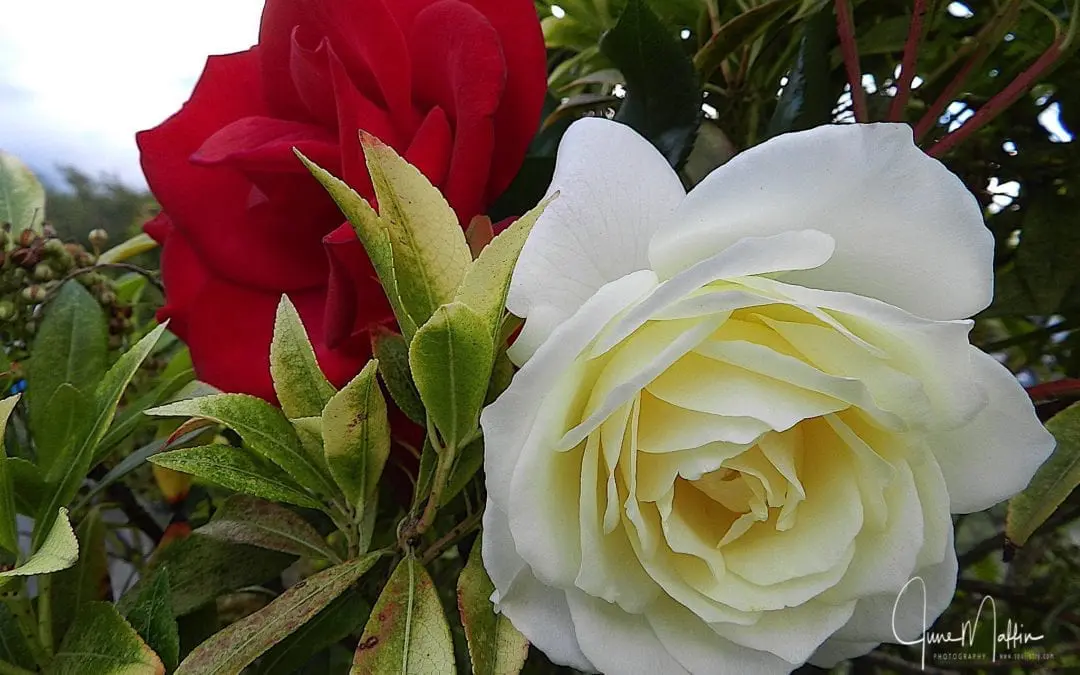
Somehow, with the way things are unfolding politically in many countries, it seems strange to be thinking of “celebrations” and “festivals” and decorating with flowers. But, then I think of the roses that are beginning to open and their blossoms bringing colour, sweet aroma and joy!
And yet – and yet I remember that their thorns prick and can cause pain. Like roses, life brings joy and can cause pain. But even with the pain, in the midst, there is hope. Look for it. It’s there. Look for it. It is here.
Where?
While it may be difficult to see, sometimes even more difficult to experience, there is hope as a new month begins. … hope – that life will return to some semblance of political normalcy … hope – that people will think, speak and act with kindness … hope – that peace will come to Ukraine, the Middle East, the United States, the other countries facing fear … hope – that this planet will survive climate change … hope – that neither nuclear nor chemical warfare will ever be used … hope – that A.I. will slow down its rapid development in unsafe ventures
Hope … because it’s the beginning of a new month. And with beginnings, there are possibilities!
Let’s not focus on the fear, but on the ‘possibilities. Every time we “think fear,” let’s find something for which we can be grateful. Just one. One thing that equalizes the impact of the negative. One person that puts a smile on our face. One action we did that made us proud of ourselves.
Just one thing so we can say/think … Happy Beltane! Happy Month of May!
Many seem unable to experience hope or joy these days. But on the last weekend in April, both were experienced by well over 500 on an island in British Columbia, Canada at the “Nanaimo Infusion.”
The story is simple: one Canadian (Tod Maffin) was concerned by the disintegrating trust between Americans and Canadians because of the tariff war created by the President of the US and the increasingly frightening situation many Americans were experiencing. He wanted to “do something.” So he posted a very short video on TikTok and invited Americans to come to his home town of Nanaimo, British Columbia one weekend to meet, experience some Canadian hospitality, possibly make new friends over a meal. He thought 4-5 people from a neighbouring State would take him up on his invitation.
It wasn’t just 4-5 but more than five “hundred” … from sooooo many States: Oregon, New York, Florida, Washington, North Dakota, Idaho, Indiana, Texas, Illinois, Virginia, New Mexico, Alabama — and more!
The weekend was incredible! People gathered on the Friday, meeting one another, enjoying the arts and crafts market and delicious food from the food trucks (in greater numbers than people could remember even being at Canada Day celebrations!). They went on free “old town” Nanaimo tours organized by Nanaimo residents; restaurants buzzed with happy conversations by the influx of tourists; some Americans were “adopted” for an afternoon or a day by BC’ers who wanted to give Americans a taste of the BC experience on the weekend; many went boating, shopping, pubbing, kayaking, crafting, whale watching and more. One fellow from Abbotsford, B.C. created “Tod’s Nanaimo Infusion” tags to put at the end of red lanyards that many bought or brought with them to identify themselves as “Infusion” participants at airports, ferry terminals, restaurants etc.
Smiles were everywhere! Laughter filled the air. The joy was palpable. And phrases of “I am so happy!!!” echoed throughout the two days in Maffeo-Sutton Park. On the Saturday, over 500 gathered again for a “family photo” at the park. It was the birthday of the originator of “Nanaimo Infusion” and hundreds spontaneously broke into loud and joy-filled singing of “Happy Birthday” as he stepped on the outdoor stage to welcome them. He was more-than-surprised!
After the huge “family photo” was taken, photos and conversations with Tod were a “must” … cell phones popped out of pockets and purses as email info was exchanged … gifts were given … gifts were exchanged … people were interviewed by local and national media. And as the afternoon drew to a close, many lingered, not wanting to leave … not wanting to let go of the wonderful feelings of hope and joy – and safety! Sadly, “safety” was a factor for many Americans who had registered for the Nanaimo Infusion but cancelled in the last week as the US President instilled fear about the possibility of ICE arresting Americans who held dual passports or were LGBTQ+ at the border and deporting them. Even though they forfeited plane, hotel, ferry deposits because they couldn’t feel secure that they could return home safely, they were part of the Discord channel (an instant messaging and VoIP social platform) channel Tod created and maintained and it quickly became a way for people to begin to get to know one another before the Nanaimo Infusion and afterwards.
Deep friendships have been made, lives have been changed, and people have returned or are returning (some extended their holidays to further explore Vancouver Island’s charm and beauty) with memories that will last a lifetime. My heart is full, the sense of “family” was tangible and the memories of the joy and expressions of happiness as Canadians and Americans gathered together in Nanaimo was and is, very special.
Remembering the words of former Prime Minister Jack Layton “My friends, love is better than anger. Hope is better than fear. Optimism is better than despair. So let us be loving, hopeful and optimistic. And we’ll change the world” may the “Nanaimo Infusion” be a catalyst for changing the world with love, hope, optimism and possibility in both countries in a variety of ways!
It’s April 22nd – Earth Day – a global annual event celebrated in more than 190 countries to show support for the environment.
Words by Thich Nhat Hanh are poignant and critical for us all to remember: “The earth is not just our environment. We are the earth and the earth is us.” Earth and human beings are inter-related.
We can not … we must not … ignore the cry from the earth, the cry of the birds and the bees and the shrubs and the vegetables and the animals and the children and …
For this planet earth to survive, we must care for Mother Earth. We must consciously work towards making Planet Earth sustainable for generations to come.
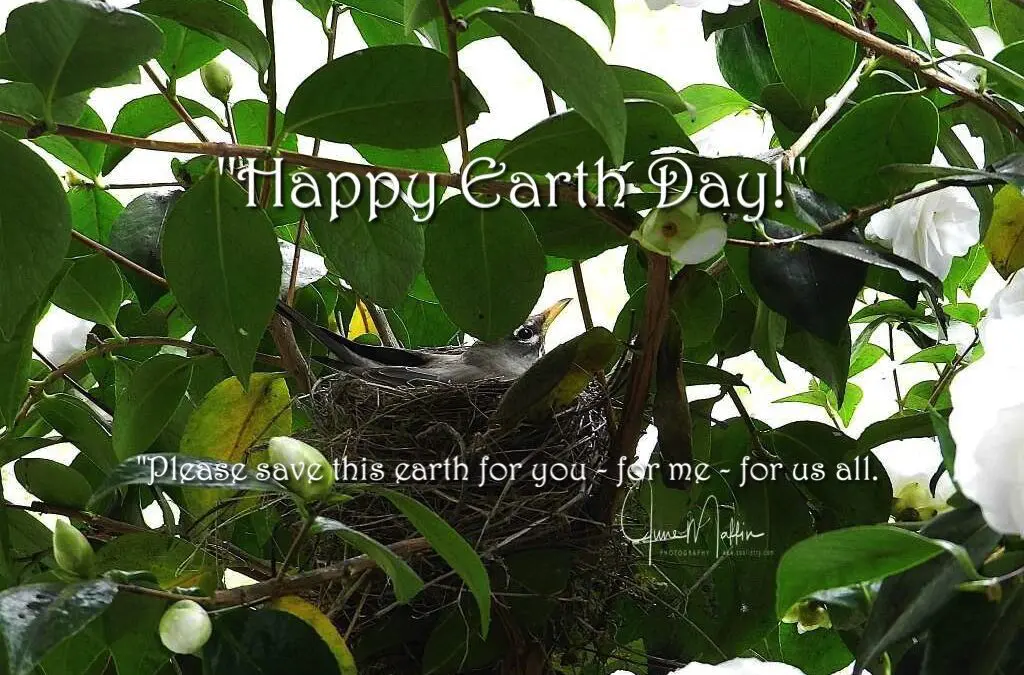
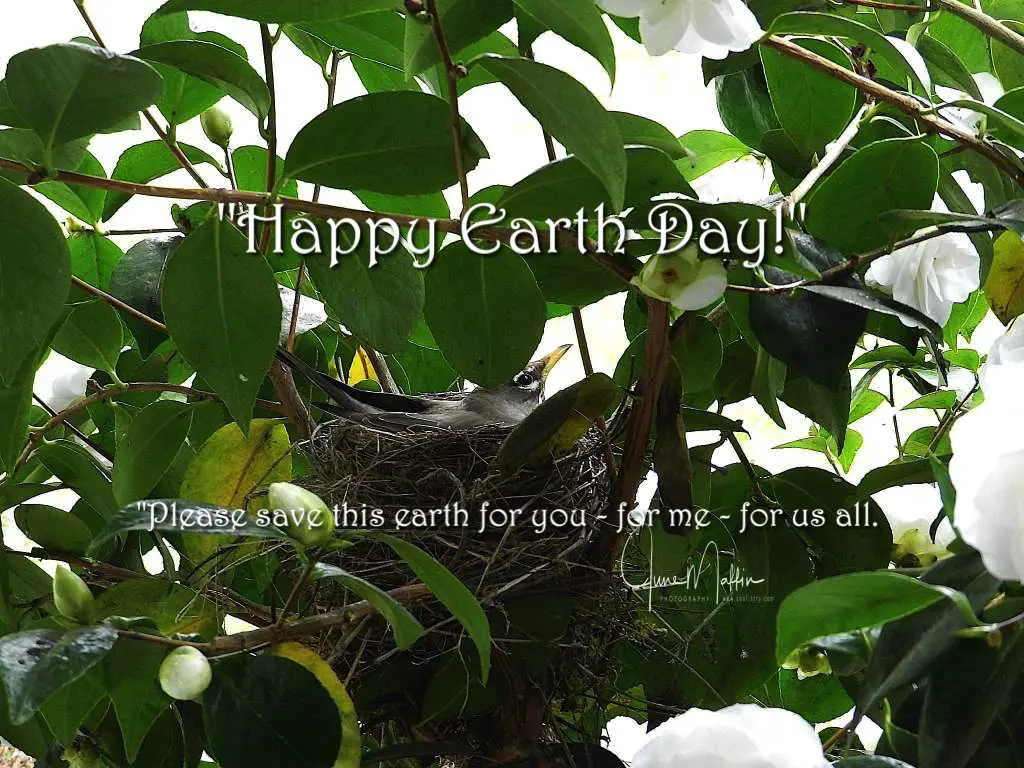
As the wee bird in my neighbour’s magnolia tree says “Please save this earth for you – for me – for us all.”
How are you marking Earth Day?
Maybe releasing Mason Bees to “go forth and pollinate”?
We’ve come to Wednesday. Not an easy week any year, but this year even more difficult for many Christians who are reflecting both on the this week known as Holy Week, and the political climate of the world with its serpentine growth of fascism around the world – and even in their own country.
Some Christians are even asking ‘Where is God?’ and beginning to question the reality of Jesus, God, the Creator, Holy Presence, Holy One.
May this story (by an unknown author – which I’ve adapted), be a reminder that whether we experience it or not, God is “checking in.”
***************
A minister passing through the old church at noon, noticed a man coming down the aisle. The man hadn’t shaved in a while; his shirt was torn and shabby; his coat was worn and frayed. He knelt, bowed his head, then rose and silently walked away. In the days that followed, the minister noticed this man kneeling, just for a moment, a lunch pail in his lap. The minister’s curiosity grew. He introduced himself and then asked “What are you doing here?”
The old man said he was a factory worker. As his lunch-time break was his prayer time for finding strength and power but was only half an hour. “I stay only a moment because the factory’s far away. As I kneel here talking to God, this is kinda what I say: “I just came by to tell you, God, how happy I have been since we found each other’s friendship. I don’t know much of how to pray, but I think about you every day. So, Jesus, this is Ben, just checking in today.”
The minister told Ben that he was welcome to pray there any time. As Ben hurried to the door, the minister knelt at the altar. His heart was warmed with love, and tears flowed down his cheeks, and the minister repeated old Ben’s prayer: “I just came by to tell you, God, how happy I have been since we found each other’s friendship. I don’t know much of how to pray, but I think about you every day. So, Jesus, this is just me, just checking in today.”
One day, the minister noticed that Ben hadn’t come to the church in several days. As more days passed and still no Ben, he began to worry. The minister asked about Ben at the factory and learned that he was ill and in hospital. He also learned that the week Ben was in hospital, ‘something’ had changed in the ward … Ben’s smiles and joy were contagious.
The head nurse couldn’t understand why Ben could be so happy, when no flowers, calls or cards came (not even one visitor)m until the minister appeared and voiced the nurse’s concern to Ben.
Looking surprised, Ben spoke up and with a winsome smile said “The nurse is wrong. She couldn’t know, He’s been here all the while and every day at noon, sits right down, takes my hand, leans over and says to me: ‘I just came by to tell you, Ben, how happy I have been since we found this friendship. I think about you always, and I love to hear you pray. And so Ben, this is Jesus, just checking in today.’
On this Wednesday of Holy Week, may we believe that Jesus is “checking in” – giving strength and encouragement. May we all have a “Ben-Faith”: a faith that is simple and profound, a faith that is trusting and hope-filled, a faith that is filled with joy and gratitude for unconditional love and because ,each day, the Creator is “just checking in” – whether or not we believe.