This is not the usual Father’s Day reflection. Father’s Day – a day marked in North America and other parts of the world to remember and celebrate the fathers in our lives … biological, foster, adoptive, grandfathers, etc. And at the same time, it is ‘usual’, because it speaks of love … love of a daughter for a father when he was fully present as “Dad,” and love of a daughter for a father who began to fade away from being “Dad.”
It was many decades ago when I learned of Dad’s dementia diagnosis.
It was a journey that our whole family took, but particularly Mom, as she watched the man she deeply loved, fade away. Dad was a brilliant man – highly intelligent; articulate; wonderful conversationalist; art historian; consultant for the National Art Gallery in Canada; entrepreneur; stockbroker; loving and devoted father, husband and grandfather; autodidact and listed in Canada’s “Who’s Who.” Not surprisingly, none of us could understand the dementia diagnosis for him.
The “why” questions emerged. At that time, so long ago, little was known about the disease. And there were no guidelines for caregivers.
Mom devoted herself to Dad and as a result, her health suffered. We almost lost her. A decision had to be made and because Mom emotionally couldn’t do that, I flew across Canada to be with them, signed the paperwork and travelled with them to the care facility. While it was one of the most difficult decisions and days of my life, it must have been far worse for both of them.
I lived over 4,000 miles away. My brother lived over 2,000 miles away. He was seriously ill. We couldn’t be there on a regular basis and take some of the caregiving of Dad off Mom’s shoulders. Mom was on her own. As she no longer drove a car, she took the bus – an hour’s bus ride to the facility in the morning, and an hour’s bus ride home at night in all kinds of weather. From the day I signed the papers and Dad moved into institutional care, Mom was with him – breakfast, lunch, dinner – every day. Not surprisingly, her health suffered. We almost lost her. Physically. Her doctor became so concerned that he told her (and phoned to tell me) that she had to stay away from the facility and couldn’t visit Dad for six months. We almost lost her again. This time, emotionally.
She just couldn’t imagine not being with Dad every day. Her grief was compounded by guilt and exhaustion at all levels.
When her doctor intervened, Mom was understandably angry and upset. But she listened, heard my concern for her and my reassurance that Dad was safe and well cared for, did as she was advised and came to live nearby me. Fiercely independent, she agreed to the move but wanted to maintain her independence. Slowly, her health began to improve. And slowly she began to see and understand the importance of self-care.
When she returned to Dad, she was healthy. And, she was wiser. She knew how to balance her time … time with Dad and time for personal rest and re-creation. After Dad died, Mom formed the first Alzheimer’s Association in Ontario. No surprise to anyone who knew her. Mom (Joy Mack) was a woman of many gifts and talents. She was a courageous woman with a vision who was determined to help people in Canada and their families faced with the diagnosis of dementia/Alzheimer’s and to this day, thanks to her, the Alzheimer’s Association in Ontario is an integral source of information, counselling and support for those dealing with dementia either as caregivers or diagnosed with the illness.
That was long ago. Today, diagnoses of dementia/Alzheimer’s continue to be pronounced. And as I get older, it seems that particular diagnosis is happening more and more frequently. The road ahead is not an easy one for caregivers of dementia patients. The person they knew, is no longer the same person. As the illness is first diagnosed and then progresses, it can take more and more of a beloved spouse, parent, sibling, grandparent, far away from reality (sometimes, slowly; sometimes, quickly). Gratefully, new medication is delaying progression in many instances but still, the changes are evident and there is deep pain at all levels for all concerned.
While dementia patients endure many basic frustrations and losses (memory is only one), caregivers endure frustration and loss when changes in their loved one emerge … the ability to enter into a meaningful conversation becomes short-lived or non-existent … the ability to understand banking or technology or recipes or even how the phone works becomes short-lived or non-existent … the ability to understand it to be a particular day or month or year … the ability to remember a birthday or anniversary or Christmas etc..
As the illness progresses, things can change for the caregiver even more … loss, grief, reality set in as the realization that the above ‘abilities’ are not functioning and no matter what they do, they cannot help their loved one to regain those abilities … stress can bring physical, intellectual, spiritual and emotional responses / reactions – not sleeping well – exhaustion – not able to concentrate – anger – reliance on alcohol / prescription drugs / medication to help ‘get through the day’ – social isolation due to not wanting to leave their loved one alone for too long – frustration at having to repeat answers to the questions over and over and over – patience is no longer part of their personality – a sense of guilt arises about leaving the person alone at home while the caregiver gets their hair done, goes grocery-shopping, takes a course/workshop, etc..
What to do? Self-care. How that self-care is manifest, is different for every caregiver because every situation is different. But the directions of flight attendants in plane emergencies: (“If the oxygen mask drops down, put yours on first and then help the person who needs help”) are a guide: self care, first and foremost. Dementia is a difficult journey for all concerned – the person diagnosed, family members who try to help by bringing up memories of the past and say “Do you remember when we … you … I did such and such? Do you remember … fill in the blanks.”
The reality is, they don’t remember and realizing they don’t remember only serves to cause them distress. So we must not go that route with them. We must “be” with them – where they are … in their time zone, in their physical space, in their understanding of situations and people. Not insist that they are with us in our time zone, physical space, understanding of situations and people.
My hope and prayer is … that family and friends will remember the importance of not asking the “do you remember” questions. May those who are afflicted with dementia know they are loved. May family members and friends not judge the decisions caregivers make for themselves, or for their loved one who has been diagnosed with dementia, for they are doing the very best they can.
And may caregivers remember the importance of self-care and take care of themselves.
First.
Their loved ones would want them to.
A PERSONAL ASIDE: Yes, this might be an unusual Father’s Day reflection, but hopefully it is seen in light of tribute to a man who faced his devastating illness with courage. The man I remember this day and many other days, Albert Edward Mack (Eddie) was a gentle, wise man – a loving and respectful-of-all-people man. The lessons he taught were ‘gift’ as I was growing up, and even more so now that I am older than he was when he died.
This day, I remember Albert Edward (Eddie) Mack with much love and deep gratitude.
Rest in peace, Dad, this Father’s Day and all days. You were a wonderful father, grandfather, husband to Mom and so much more. I honour you. Your memory is such a blessing.
I love learning. No, scratch that. I’m passionate about learning! I try to learn something new every day. Some days the learning is huge. Other days it’s subtle. Some days the learning is about me … what I believe, who I am, things I need to work on. Some days the learning is about others … how hurtful, resentful, unloving, unkind, mean-spirited, unforgiving, people can be … how generous, gracious, kind, thoughtful, compassionate, people can be. Some days the learning involves a new approach … to technology or art or gardening or writing or music or a new chess move or craft or history or literature or religion or politics.
And some days, it’s a combination.
Each night before I go to bed, I ask myself “what have you learned today?”
Recently a difficult moment and at the same time grace-filled moment, helped highlight a lesson again.
It was the lesson of forgiveness. Again.
Just when I think I’ve learned this lesson, another situation / person / event reminds me that forgiveness happens over and over and over and over again.
Forgiveness of others … forgiveness of self … forgiveness of God/the Creator.
They’re not easy lessons, but they are important and integral to spiritual growth and self-awareness.
This is a difficult time for many. Terrible things are happening. … The people of Ukraine continue to be at war. … Say the words “Israel, Palestine, Gaza ” and people “take sides.” … People flee their homes in the hope of finding refuge from fire, ICE, earthquakes, tornados and more … Fear, anger, loneliness, suspicion, hatred permeate conversations at home and work and on social media This is a difficult time for many.
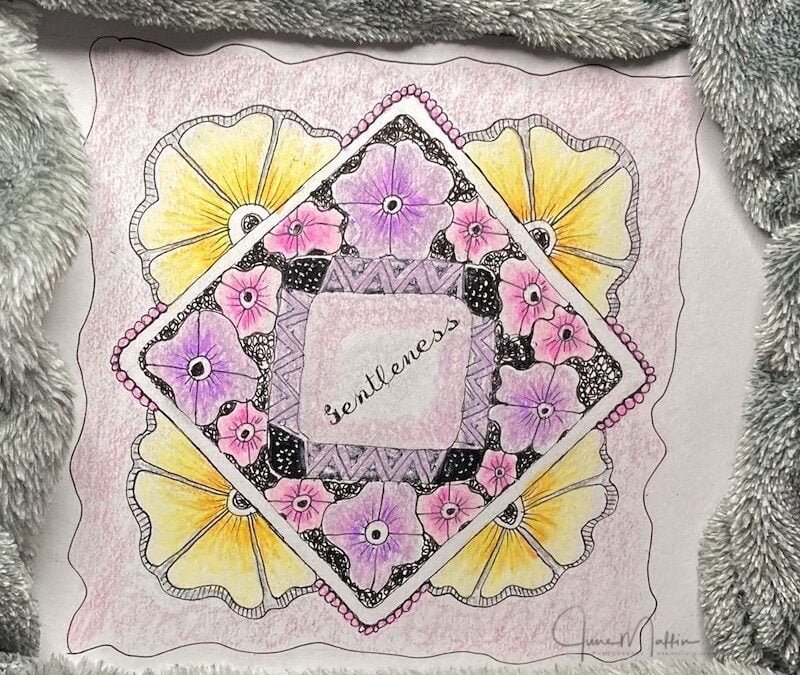
The concept of ‘gentleness’ … the quality of being kind … comes to mind. Gentleness has disappeared and is no longer present. Why? … Can gentleness exist when fear overwhelms? … Can gentleness exist when suspicion transcends reason? … Can gentleness exist when anger rages? … Can gentleness exist when hatred fuels communities, families, elections, countries, politicians, so that there is no space for hope to filter in, for fear to be lifted, for hatred to dissipate?
Being gentle does *not* mean ignoring the role we can play by … being a voice for the voiceless … righting wrongs … challenging principalities and powers by our words, thoughts, actions, prayers.
Being gentle *does* mean … speaking in tones and words that don’t threaten … acting in ways that don’t incite … “thinking through” situations and responding rather than reacting. … listening to the voices of those who have walked similar paths before us: Gandhi, Anne Frank, Malala, Martin Luther King Jr., Jesus, Elie Wiesel, the Dalai Lama and many others.
Being gentle *does* mean … not giving power to hurtful words in personal emails, social media posts, phone calls, snail mail letters … focus on addressing wrongs in our own community we’ve overlooked or ignored in the past because it was happening to *the other* and not to us, because we didn’t want to get involved, or we didn’t think it would make a difference.
Hurtful words and actions can push us forward so we give financial support to organizations who are being threatened … offer sanctuary in our homes, our cities, our countries … speak gentle words of strength, courage, steadfastness and hope to those who are deeply wounded by the rhetoric and chaos.
Embodying a life of gentleness could mean much to individuals, families, communities, countries and this world.
May we be gentle with one another. May we be gentle with ourselves. “Be gentle with yourself and others. You are a child of the Universe. So are they. You have a right to be here. They do, too. So let us be gentle with others and ourselves.” <an adaptation of American writer Max Ehrmann who penned the “Desiderata.”>
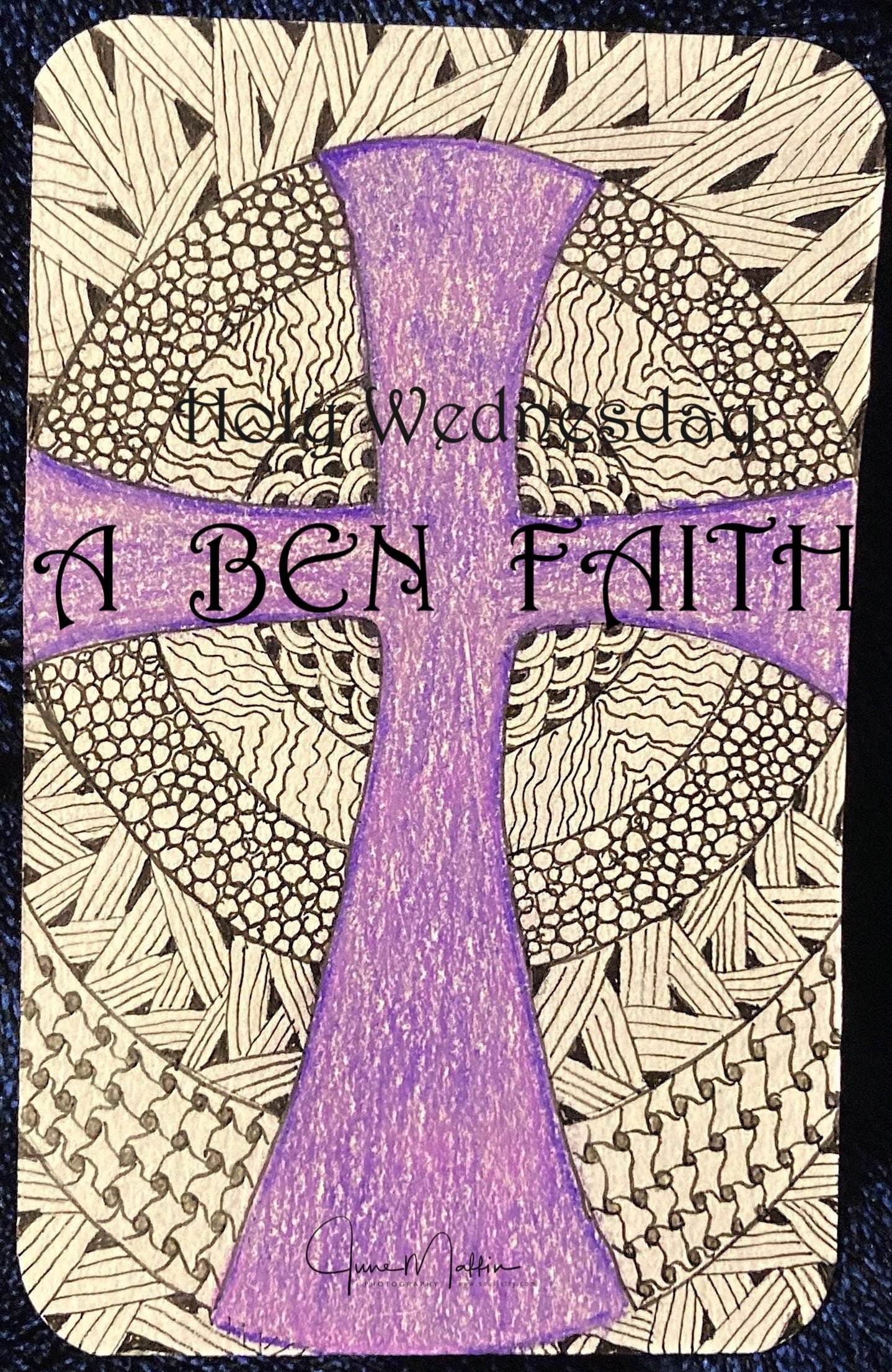
We’ve come to Wednesday. Not an easy week any year, but this year even more difficult for many Christians who are reflecting both on the this week known as Holy Week, and the political climate of the world with its serpentine growth of fascism around the world – and even in their own country.
Some Christians are even asking ‘Where is God?’ and beginning to question the reality of Jesus, God, the Creator, Holy Presence, Holy One.
May this story (by an unknown author – which I’ve adapted), be a reminder that whether we experience it or not, God is “checking in.”
***************
A minister passing through the old church at noon, noticed a man coming down the aisle. The man hadn’t shaved in a while; his shirt was torn and shabby; his coat was worn and frayed. He knelt, bowed his head, then rose and silently walked away. In the days that followed, the minister noticed this man kneeling, just for a moment, a lunch pail in his lap. The minister’s curiosity grew. He introduced himself and then asked “What are you doing here?”
The old man said he was a factory worker. As his lunch-time break was his prayer time for finding strength and power but was only half an hour. “I stay only a moment because the factory’s far away. As I kneel here talking to God, this is kinda what I say: “I just came by to tell you, God, how happy I have been since we found each other’s friendship. I don’t know much of how to pray, but I think about you every day. So, Jesus, this is Ben, just checking in today.”
The minister told Ben that he was welcome to pray there any time. As Ben hurried to the door, the minister knelt at the altar. His heart was warmed with love, and tears flowed down his cheeks, and the minister repeated old Ben’s prayer: “I just came by to tell you, God, how happy I have been since we found each other’s friendship. I don’t know much of how to pray, but I think about you every day. So, Jesus, this is just me, just checking in today.”
One day, the minister noticed that Ben hadn’t come to the church in several days. As more days passed and still no Ben, he began to worry. The minister asked about Ben at the factory and learned that he was ill and in hospital. He also learned that the week Ben was in hospital, ‘something’ had changed in the ward … Ben’s smiles and joy were contagious.
The head nurse couldn’t understand why Ben could be so happy, when no flowers, calls or cards came (not even one visitor)m until the minister appeared and voiced the nurse’s concern to Ben.
Looking surprised, Ben spoke up and with a winsome smile said “The nurse is wrong. She couldn’t know, He’s been here all the while and every day at noon, sits right down, takes my hand, leans over and says to me: ‘I just came by to tell you, Ben, how happy I have been since we found this friendship. I think about you always, and I love to hear you pray. And so Ben, this is Jesus, just checking in today.’
On this Wednesday of Holy Week, may we believe that Jesus is “checking in” – giving strength and encouragement. May we all have a “Ben-Faith”: a faith that is simple and profound, a faith that is trusting and hope-filled, a faith that is filled with joy and gratitude for unconditional love and because ,each day, the Creator is “just checking in” – whether or not we believe.
EVIL, That word has been ascribed to people over the centuries: Adolf Hitler, Joseph Stalin, Vlad the Impaler, Pol Pot, Heinrich Himmler, Saddam Hussein, Idi Amin, Ivan the Terrible, and more – including lately to DJT and his minions. And that same word has been ascribed to events: concentration camps; residential schools; torture; migration detention centres, even linked to social media posts.
Where is the hope in all of the continuing evil happening in Ukraine, San Salvador, Sudan, Palestine, Yemen, Somalia, Myanmar, Israel, Columbia, the United States?
Where is the hope in the injustice, suffering, poverty, ruthlessness, vengeful actions of people with power?
This week, known as Holy Week, Christians are reflecting on the “Where is the hope? Where is God” questions with deep intentionality.
Even in the face of terrible suffering, betrayals, there is a message of hope … through perseverance, truth, and faithfulness … that grace is greater than our brokenness …that God’s love remains the anchor even when faith wavers.
Like many, I struggle with that message in the face of such hate, cruelty, and yes, at moments, hopelessness.And yet, in the midst of it all, there are people carrying the torch of hope by “showing up, speaking out, speaking up, voting for democracy and against fascism” even at great personal risk and cost.So when my faith wavers, I pray that I will be of good courage when I fear, have faith when I falter, be able to walk through the shadow, have patience that good will overcome evil, love will prevail over hate and hope will reside deep within us all.
But, even though I choose to believe in goodness … try to speak honestly with love undergirding my words … try to listen to the heart in words that spit anger / hatred / evil and see beneath the anguish of poverty, hunger, fear, suffering of any kind … try to see the soul of the people in pain rather than their race, religion, sexuality, financial state, country of origin, and (lately this has been an increasingly difficult thing to do) their political beliefs, I am not a pollyanna. And some days, even being a person with a high theology of hope, is difficult.
And then I remember that a world without hope is the beginning of the end of a constructive society. So, we have to support one another, pray for one another, talk with one another, be there for one another. Today, Jennifer Vasquez Sura, wife of Kilmar Abrego Garcia, (a Maryland resident with U.S. protected status since 2019 was erroneously deported on March 15, 2025, despite a court prohibition on his deportation to El Salvador’s Terrorism Confinement Center), quietly and courageously spoke about the need to “be there for one another.” In spite of her husband’s horrific situation, she has hope.
There must be hope. Even though the pain is real and the future is uncertain, we must hold on … to the promise of hope … to the possibility of hope …in spite of DJT … in spite of his minions … in spite of Putin … in spite of despots, fascists, wanna-be dictators …in spite of the fear.
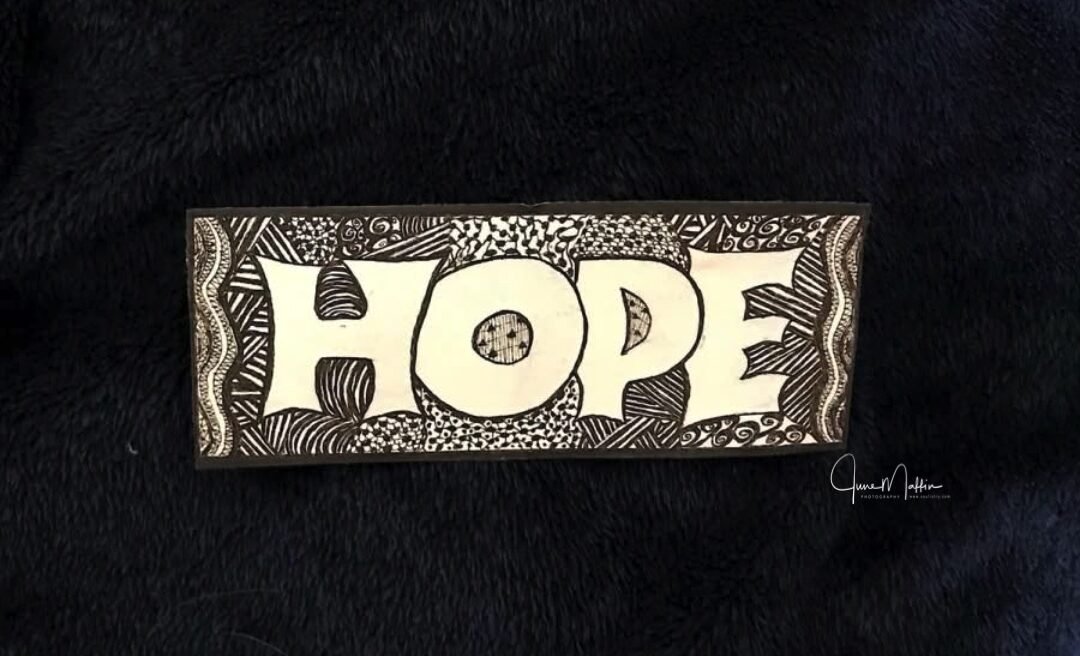
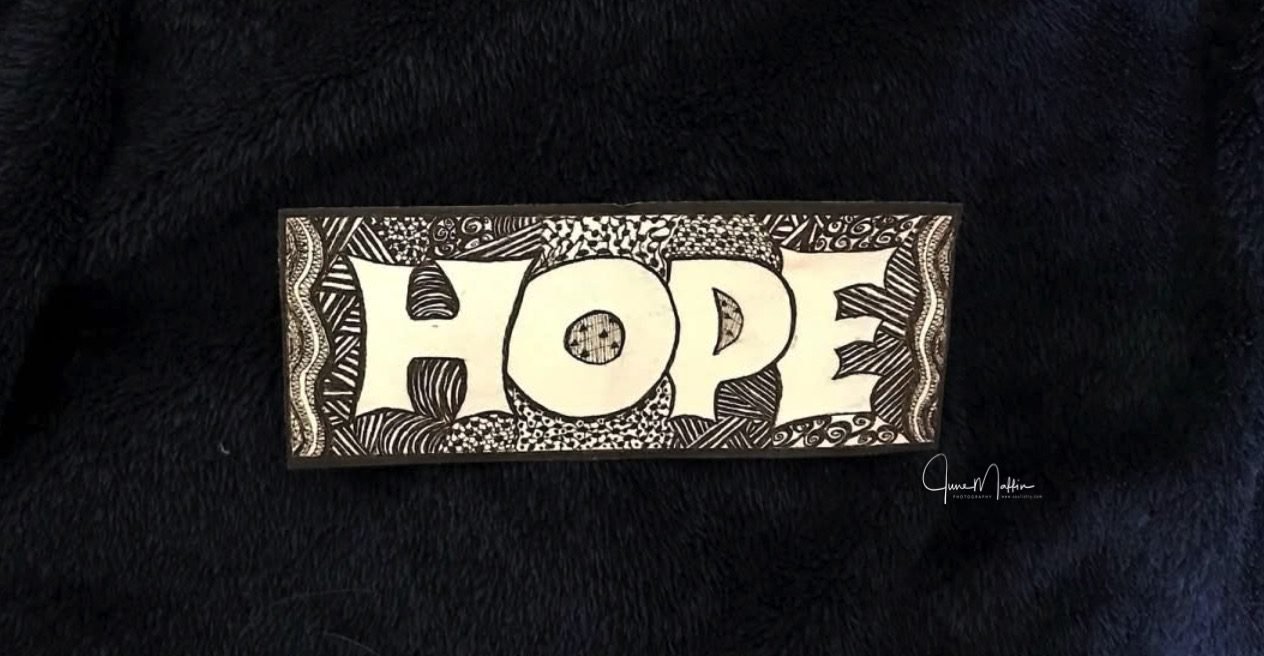
Hope is action … in small ways, quiet ways, large ways, noisy ways, visible ways, unseen ways.Hope isn’t a passive act, or simply a reactive or frivolous act. Hope underlies our action and is our connection to continuity as a human species. May hope break through the evil that is happening in political decisions, television, tweets, conversations.SOON.
Today is a special Monday – it’s Monday in Holy Week. Many are feeling alone. Alone – because of the stresses of the world. Alone because of the political crises in the United States, the ongoing war in Ukraine, the threats on Canada, Panama, Greenland and many other places around the world Alone and fearful because of concern about their health, finances, jobs, relationships. Alone – with their thoughts. Alone – with their questions. Alone.
If anyone understands what ‘being alone’ means, especially this week, it surely must have been the man known as Jesus of Nazareth.
Many believe that they are living in a world under the shadow of war … a cloud of difficult days of climate change … loss of democracy … viruses that just won’t leave.
It’s all a frightening reality. The man Jesus, knew about frightening realities.
May this holy week be a time to reflect on what ‘being alone’ is for ourselves, for others and what it must have been like for the man known as Jesus.
May we know who we are. May we know Whose we are. And may we know the Love that surrounds us.
May we be blessed with an abiding sense of love – a Love that envelopes and casts out fear of the known and unknown.
May this day and every day in Holy Week, bring a blessing that touches life in ways we can’t even begin to ask or understand.
May we be blessed by the ability to breathe in Ruach, healing, sanctifying, renewing, be blessed by a precious peace that passes understanding and be blessed by the Love that sustained the man Jesus on this difficult day in Holy Week.
The flower pins, made for friends as a sign and symbol of Love, were made using pieces of white felt and small pearl-like additions in the middle of the flower.
~~~~~~~~~~~~~~~ A Soulistry reflection on each day in Holy Week will be available on the Soulistry blog (https://soulistry.com/blog). You are welcome to share any Soulistry reflection and subscribe (https://soulistry.com). As reflections are added, they will come into your inbox (for free, personal information is not retained or sold). ~~~~~~~~~~~~~~~~~
Weaving is not something I have done very often, but a weaving metaphor seems appropriate when political strands are divided … families are broken … countries are shattering from within … the world seems to be moving away from democratic principles … and people are not reflecting the ideals of peace and love which religious and philosophical leaders have taught and modelled for centuries.
People need a vision – a vision of hope for “where there is no vision, the people perish.”
The Weaving Prayer surfaced on this the eve of Holy Week (the final week of the Season of Lent in the Christian calendar which commemorates the final days of Jesus’ life, leading to his crucifixion and resurrection), known as Palm Sunday. The prayer is for them and for those who may not align with the Christian faith yet also need a vision of hope.
WEAVING PRAYER Weave, O Holy One, our differing threads of opinions, our global fear, our various political strands, our diverse liturgical expressions, our different ways of looking at the world into a sacred tapestry so that we will be empowered to hope and vision a world where Love, not fear, not ego, not pursuit of power, not idolization of money is the centre of decisions, thoughts, actions and conversations.
Great Weaver of all, when we find ourselves regretting the past, when we are uncertain of the present, when we are fearful of the future, help us. May this coming week (Holy Week) be one of hope, not panic. May it be one of gentle reflection, not listening to the fear mongers. And may it be a week of inner response, not reaction which clouds our vision of hope.
O Great Weaver, encourage us not to focus on the underside of the Tapestry where our knottedness, frayed ends, and tattered threads can be seen. but where we may envision the entire Tapestry of community: a tapestry of differing colours, customs, abilities, religions, languages, and ages, as we work together during these difficult days towards a vision of love, peace, respect and kindness. Amen. So be it. Amen.
You are welcome to share any Soulistry reflection and subscribe (https://soulistry.com/blog – it’s free and personal information is not retained or shared) so that the Reflections will come directly into your inbox.
For forty days and forty nights, every year, millions of people around the world are involved in sombre reflection and Lenten observance in something called the Season of Lent.
Last and this year, Lent has been a time of darkness in Ukraine, Afghanistan, Ethiopia, Palestine, Iraq, Yemen, Israel, Syria, Somalia, Libya, the Central African Republic, the Democratic Republic of Congo, Myanmar, Colombia, Mali – and who would have thought it, but Canada, Panama, Greenland, the United States too.
While it would be lovely to bypass the Season of Lent, it has its place in the circle of life. And not just for those who observe the Season of Lent as a religious focus. Lent can serve as a reminder that not everything in the world (or in people’s lives) is happy or cheery or going well.
There is darkness in situations that can personally envelope people in a shroud of negativity. An unknown author wrote “If only our eyes saw souls instead of bodies,” and it echoes the cry of many whose value in society seems to be based on others ‘seeing’ them through the lens of financial status, ability, weight, skin colour, age, political belief, gender, sexuality, religion, etc., rather than ‘seeing them’ through the lens of the soul.
What a different world it would be if, instead of talking negatively, criticizing, nagging, finding fault, putting others down (not to mention ourselves), we talked about blessings, spoke about the goodness that ‘is’, and expressed gratitude more than we express frustration, criticism.
Perhaps if this were the focus, it might be easier to see people as souls, and not as unemployed, homeless, disabled, addicted, uneducated, a particular race or colour or religion or age or political belief or financial status etc. By adopting such a focus, it could be easier to relate to ‘the other’ as a person of worth, rather than ignore, pity, judge, bully, ridicule or hate them. It could be easier to see beauty – in others, in our world, within ourselves.
The Season of Lent invites us to metanoia – ‘turn around and focus on a change of heart.’ Some interpret that as ‘repentence.’ While I see merit in such interpretation, my way of encountering the Season of Lent is to focus on change … to change my heart – about other people – the future – myself – and ask “How can I let light in and truly see?”
Lent also has a reputation of being a time to ‘give-up’ (‘fast’-from) chocolate, desserts, social media, etc. I don’t do that. My focus is not on “giving up” but on “letting-in.”
While, I am being aware of the 40 days of Lent, I am not “giving up” something for Lent. And I am not focusing on repenting for things in the past because I try to do that when I realize the error of my ways and then move on, trusting that I am loved and forgiven.
In the Season of Lent, I am choosing to be on the lookout for souls in the lives of all people.
The Season of Lent is coming to a close. This Sunday begins what is known as Holy Week. Then comes Easter. While I know I will be grateful to see the end of the Season of Lent, I hope I continue to let each day be a gentle reminder of the Season of Lent: a time of “seeing-souls.”
Weather-wise,
it is overcast and gloomy.
Nature has arrived in full force
bringing devastation and tragedy.
Politically,
aftershocks of the global tariff war
have begun to arrive in full force
heaping grief, disillusionment, anger and unbelievable fear.
When the going-got-rough for our forbears:
… poverty, war, hurricanes, ill health,
they held on to inheritance of the generations before them
their ancestors
who provided a legacy
of endurance and strength and hope.
Sometimes, that legacy was all they had to hold onto.
These days, it may be all we have to hold onto.
As the mountains in the photo speak of strength
the trees speak of endurance
the roses speak of hope
… all in one photo
inside each of us
through the legacy entrusted us,
by those-who-have-gone-before
is strength, endurance, hope.
In difficult times,
let us “hold on.”
We will.
We must hold on.
Just as our ancestors have, in the past,
one step,
one moment,
at a time
we, too,
will “hold on!”
MAiD (Medical Assistancein Dying) became law in Canada in June, 2016 with a variety of responses. It has been welcomed, ignored, misunderstood, controversial, deemed to be anathema.
Many years ago, the request by a friend to sign as a witness on her MAiD document, made me pause and reflect, once again, on life, on death, on compassion, on personal decision-making about one’s own body and more.
I found myself going back decades ago and a conversation with my mother who wanted to have ‘the conversation’ with me. Having serious health issues, she wanted me to know her thoughts on dying and her wishes. We had ‘the conversation’ many times over the years.
The day in her doctor’s office when he told us that Mom’s kidneys had failed and she would have to go on dialysis immediately, Mom made it very clear that she would not do dialysis. The earlier conversations we’d had over the years were brought into reality.
Mom had often expressed a hope that the Canadian government would let people who had been diagnosed with a terminal illness, make the decision as to the timing of when they would die for themselves in consultation with their doctor. Mom didn’t get her wish. MAiD was not legal at that time.
Before my husband Hans and I married, we talked about our “final wishes” and MAiD emerged in conversations. Hans was born in the Netherlands where they had their own equivalent to MAiD. He had researched it, was a supporter, and when his first cancer diagnosis was pronounced, we revisited our early discussions. With his second cancer diagnosis, he wanted to formalize things with his doctor and let him to know that if the prognosis were terminal with extreme pain and incapacitation, he wanted to be a candidate when the law was passed in Canada.
With his third cancer (terminal esophageal) a few years later, he knew that the extreme pain he dealt with each moment, would get worse as the cancer continued to spread. There was no quality of life for him at that time. He couldn’t swallow; he couldn’t speak above a whisper; he was exhausted and the pain was not being managed. The time had come. He reminded me that his wishes remained strong and steadfast and that if he couldn’t be granted his request in Canada, he wanted to go to the Netherlands where his request would be granted.
He reminded me of our experience with Shandy, our rescue-dog and beloved King Charles spaniel who had been in pain for too long. While the medications helped her somewhat, pain was her daily, ever-increasing experience. The morning we put her favourite cookie in her mouth and she didn’t know what to do with it, we were at a complete loss. The vet diagnosed it as ‘canine dementia,’ and told us that her kidneys had now failed. He could offer no further remedial help.
Shandy had no quality of life. She wasn’t eating. She was in emotional distress and constant physical pain. She was deaf and almost completely blind. The vet asked what we wanted to do. We asked ourselves “Could we love her enough to let her go?”
It was Friday. An appointment was set for the procedure to happen the next morning. “Monday.” I said. “How about we have her with us over the weekend and have the procedure done on Monday?” My wise husband let me talk and cry it out. He had had dogs all of his life and had walked this road with them in the past. Shandy was my first such experience. Hans and I talked and listened to one another in the silence as we held Shandy close to us. And then I heard myself say “Let love speak.”
By rescuing her from a terrible situation so very long ago, she had been given love and a life of freedom from the pain she had endured from a cruel owner. That was then.
Could we give her love and a life of freedom from pain now – even if that meant we would no longer have her with us?
As difficult as it was, we knew that it was our time to give Shandy the gift of unconditional love and let “love speak.”
I will never forget Shandy’s eyes as she sat on my lap on the drive to the veterinarian’s office the next morning. Usually, on the road and at the vet’s, Shandy was agitated. Not that time. This time, she was quiet. She was at peace.
Love spoke. Under the gentle hands of the vet, Shandy gently left us.
Supporting Hans’ decision for MAiD was personally difficult. But in remembering our experience with Shandy, I knew I had to “let love speak” and support my husband’s decision.
When I sit in a doctor’s office and am asked to sign MAiD papers for friends with whom I have spent a lot of time listening to and talking about ‘possibilities’, I remember my mother. I remember Shandy. I remember Hans. And each time, as I sign the papers, I know that the motivation is clear … “Let love speak.”
While I pray that each person whose MAiD paper I sign will leave planet earth gently, in their sleep, I am aware that death may not happen that way. If that doesn’t happen, and they choose to invoke MAiD, I will ‘let love speak’ and support them in any way I can.
And, should such a time come when I make such a decision for myself, I pray that others will ‘let love speak’ and support me in my decision.
May love always speak.
~~~~~~~~~~~~ An aside – this reflection is not intended to cause debate, argument, distress or controversy about the MAiD program in general or in particular. It is a personal reflection only. *****************************