I saw children shooting hoops, a crocus, snowbells, daffodils, an art gallery on ZOOM, dishes that needed to be washed, a mom with a smile, pushing her little one in a stroller, a cashier wearing a mask, weeds growing in the yard, colour on leaves, on cars, on clothing, in the sky, words on a page in a book, a face looking back at me in the mirror reminding me of Mom, strawberry leaves poking their heads above the straw, a grocery reminder list, a rainbow,
When I opened my eyes that morning, I expected to see awe and wonder. I wasn’t disappointed.
They, and joy and gratitude appeared … in the ordinary and the spectacular … above and below and behind and around.
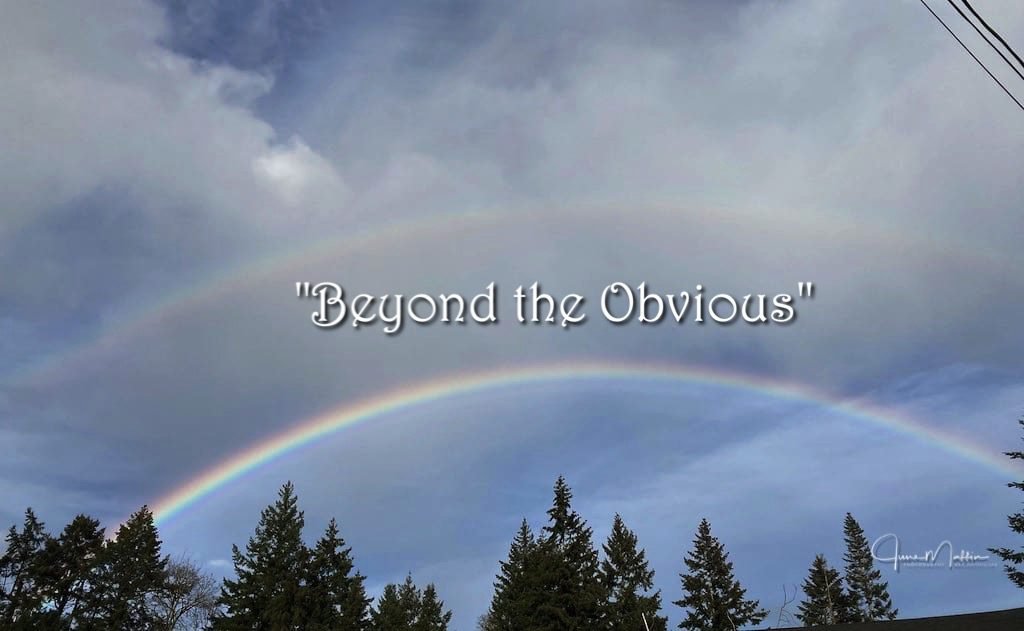
What I saw when I took this photo of a rainbow, was breath-taking. Rainbows always take away my breath for a moment.
But other things take away my breath … like the possibilities which abound each and every day by looking and seeing, by being grateful, and looking beyond the obvious.
Downloading my photos another breathtaking moment … as I saw what was a double rainbow because when I took the photo, I didn’t see the double rainbow.
Maybe this was a gentle reminder of what may appear when we consider ‘beyond the obvious’ in what we see and what we hear in what we believe and even what we think we see, hear, believe.
Sometimes the learning, the lesson, the spiritual growth is obvious. Sometimes the learning, the lesson, the spiritual growth is “beyond the obvious.”
It’s not unusual to feel “down” about the future of this world. It’s not unusual to not be able to feel joy. It’s not unusual to want to curl up with a book in bed or binge on tv shows that take one’s mind away from war, climate change, health issues, murder, addiction/homelessness/poverty in our own town/city, etc..
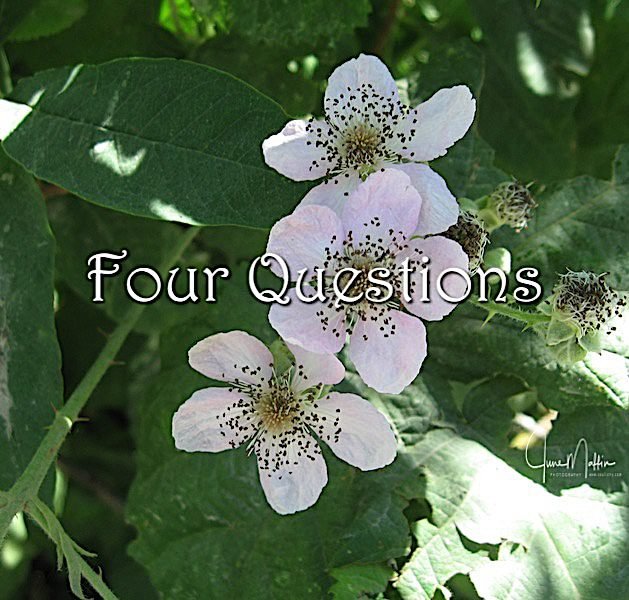
If that’s you, or someone you know, it might help to ask Four Questions asked by healers in many shamanic societies –
When did you stop dancing?
When did you stop singing?
When did you stop being enchanted by stories?
When did you stop being comforted by the sweet terrain of silence?
The questions are simple … and profound … because –
When it comes to dancing … by ourselves or with a partner, dancing is a way that our body and mind communicate with the other and bring about an integration of body and soul.
When it comes to singing … endorphins are released when we sing, reducing stress in our mind, body, and spirit. And besides, it’s fun.
When it comes to “being enchanted by stories” … important lessons in life can be learned and our imagination can soar and a brief respite from life’s difficult situations can become part of our experience.
And when it comes to being comforted by the sweet terrain of silence … perhaps turning off the news for a few days and listening to the songs of the birds, the rustle of the wind, the flutter of butterfly wings will help cultivate a deep sense of peace within.
Perhaps one way to cope in difficult times is to ask the Four Questions of ourselves?
Then wait, listen for the answers deep within, and if the answers reflect answers that are more like ‘never, infrequently,’ perhaps do something to change one, more, all of our answers to the questions so they become ‘sometimes, often, regularly’?
Tomorrow, February 14th is going to be an unusual day for those who like to mark Valentine’s Day and for whom Ash Wednesday is part of their faith. This year, they both occur on the same day!
Around the world, people will gather to receive the ashes on their forehead and hear the words “Dust thou art and to dust thou shalt return” on what is known as Ash Wednesday – the first day of what is known as the Season of Lent.Those words are certainly not anyone favourite words, but they represent a truth which is important to remember from time to time – our own mortality. Ash Wednesday every year, is a sober reminder that we are mortal – not immortal. Acknowledging our humanity, our vulnerability, our mortality, helps us to live more fully.
Do we need to be a Christian to do that? No. Do we need to have experienced an Ash Wednesday service before? No. Do we need to be connected to a church to do that? No. All we need to do is accept our mortality, allow the ashes to be a sign – an outward symbol of what is hoped would happen internally and a commitment to be the best we can be – that we recognize that our mortal life is a gift, and commit ourselves (with the help of the Holy One if that is part of our belief), to use the rest of our mortal life to the very best of our ability.
Side bar – interestingly, the imposition of ashes, is not just a Christian tradition. It was an ancient Jewish tradition and was a public sign of an individual’s repentance. By the seventh century, the Christian church adopted it as part of the Church’s Lenten preparation before the Season of Easter.
The ‘imposition of ashes’ can take various forms: sprinkle ashes into the palm of one’s own or a family member’s hand and apply it to the forehead; use a cotton Qtip, dipped into the ashes and placed on the forehead. Some groups/congregations give members dirt, seed and water instead of ashes, acknowledging that from the dust of the world, new hope springs.
Some churches encourage people to mark their hearts with the sign of a heart (or the Cross) as an outward and visible sign of their intention to turn their heart to God and experience God’s unconditional love and forgiveness in a new way, saying the words “Dust I am and to dust I shall return.” Whatever way each of us chooses to observe Ash Wednesday, may we enter with humility and gratitude.
This year, Valentine’s Day is also happening tomorrow on February 14th. It is a day where people talk about love and try to express love by giving flowers/heart-shaped cards, chocolates. But could there be more? Could something more happen on this duo-day of emotion?
This year on Ash Wednesday/Valentine’s Day, could we love our families sufficiently that we have the “I don’t want to have this discussion with you, but it’s time” conversation with them? You know the conversation … it’s about the reality of our death.
Could we talk about the inevitability of death in general and about our own death in particular … talk about how we hope we would die (most of us want to be home, go to sleep and not wake up); talk about the “What if’s” (what if we don’t die at home in our sleep? what if we are riddled with pain? what if we face a future of permanent care in an institution etc); talk about, what would we want to have with us if we find ourselves in institutional care or are receiving palliative care in a facility or at home and even our view about MAiD (Medical Assistance in Dying).
Such a talk would not only be for ourselves, but for our loved ones, so that should something terrible happen, should “it” – or the illness get to a level where institutionalization, palliative care etc. need to be addressed and our families have to make decisions on our behalf, they will be doing so in accordance with our wishes.
But if we don’t have “the conversation” with our adult children/partner/best friend – whoever – they will be at a loss and their confusion about ‘what to do’ will be added to the fear, anxiety, grief they feel when they get “the phone call/text/email.”
I have sat by the bedside over the years of countless people who did not have any such conversation with their loved ones because they “didn’t want to worry them,” “didn’t want to upset them”, “stress them”. So, they did not have that conversation. When “it” happened, their family members, dealing with a wide variety of emotions, were faced with a parent/partner/loved one dealing with a stroke/untreatable illness/inoperable results from a vehicle accident, would tell me how much they wish they knew what their loved one would want them to do at such a time.
So in keeping with the theme of Valentine’s Day “love” and the theme of Ash Wednesday’s “mortality”, let’s have that difficult conversation – for them.
Let’s sit down for a serious conversation and begin in your own words. For me, with my adult son, it was along these lines — “This is a difficult subject and I want to talk about it with you.” I wasn’t seriously ill; I wasn’t facing a traumatic event; no “reason” to have such a discussion at that time other than I loved him enough to talk about the eventuality of my death and let him know my wishes.
So I told him where my Will was, told him about the specifics of my wishes (duly signed and witnessed via a Representation Agreement – in some places it is Living Will); spoke to him about which of the three levels of DNR (Do Not Resuscitate) I would want if faced with such a situation; we spoke of ‘service’ should I die and that would be his decision at the time – no “must have” a service; mentioned where I would want my cremains to rest; what funeral home had my pre-paid plan; showed him where I kept paperwork about lawyer / house / car / insurance / banking / computer / social media / income tax info / etc.; gave him a list (if I had to go into permanent institutional care), of things which I thought might help my transition. And, I put some of that (esp. the DNR info) in an envelope on the front door of my fridge as that is the only place First Responders go to check such information.
Such a talk would not be an easy discussion, by any stretch of the imagination. But it is one that we all need to have. And have that conversation now – while we are able to make our wishes known.
Don’t wait. Do it on Valentine’s Day/Ash Wednesday this year. Then it will have been done, and you can be at peace, knowing that you will be helping your loved ones at a time when they must deal with the reality of the serious illness/death of someone they dearly love – you.
A true story: He was about eight. She was about seven. They were talking about another child, a classmate who stuttered. When their mother said “She can’t help it. Be kind,” the two children laughed. “Why?” the boy asked. “You make fun of Mrs. Baker. You’re not kind to her.”
I didn’t stay around to hear the rest of the conversation. I’d heard enough. The mocking, belittling, bullying language the two children used was language they’d heard – and learned – at home.
The mocking, bullying, belittling language children hear at home … the lies from leaders … the vitriol expressed on social media … the lack of kindness on the road, in stores, in families, in volunteer organizations, at work, etc., is teaching our children, youth, grandchildren, us … and what it’s teaching isn’t good.
The ‘wand of negativity’ seems to be on the increase in so many sectors of society. It takes so much energy! It drains – physically, emotionally, spiritually. And it’s not helped by the polarization of people taking ‘sides’.
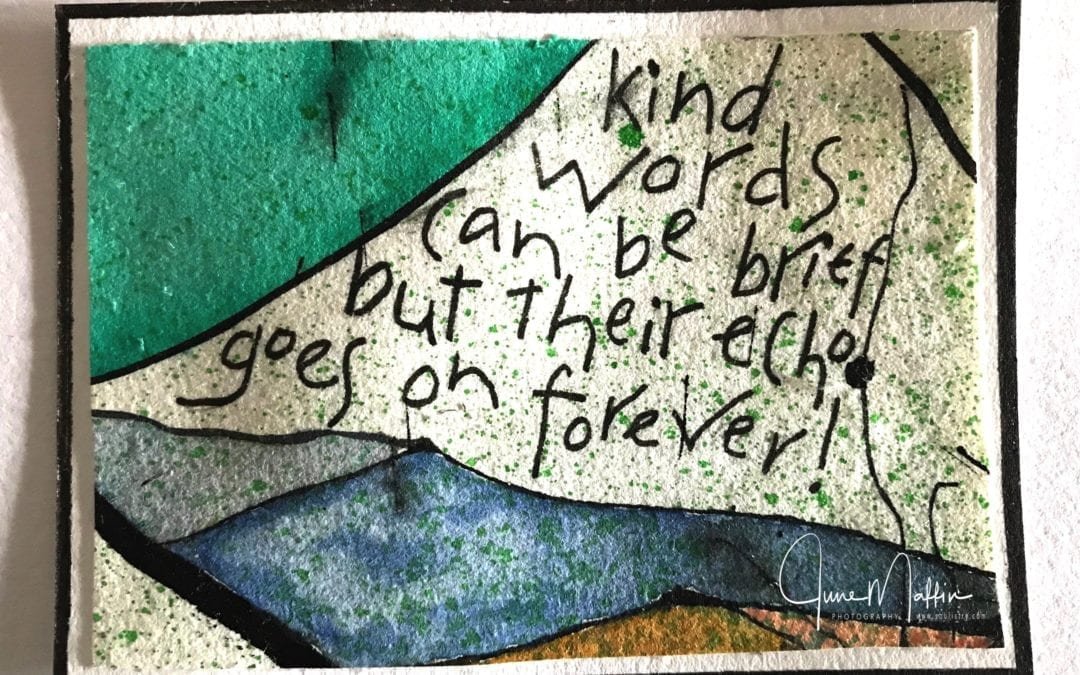
On the other hand, the ‘wand of kindness’ doesn’t take anywhere nearly as much effort. Kindness can uplift – physically, emotionally, spiritually. Mother Theresa said “Kind words can be brief, but their echo goes on forever.”
May we pick up the ‘wand of kindness’ a bit more tomorrow, than we did, today.
May we wave the ‘wand of kindness’ a bit wider than we did this week.
May we *be* the Wand that brings kindness to those around us, those we encounter, those we think about, those with whom we interact in person, on the phone, on social media.
May we extend that ‘wand of kindness’ to ourselves in these difficult times.
The month of February can be difficult for many. Social media and local stores focus on Valentine’s Day to the hilt.
Many have outlived their partners … parents have outlived their children … children have outlived their parents/siblings … close friends have died … and there’s no one to say “Happy Valentine’s Day”.
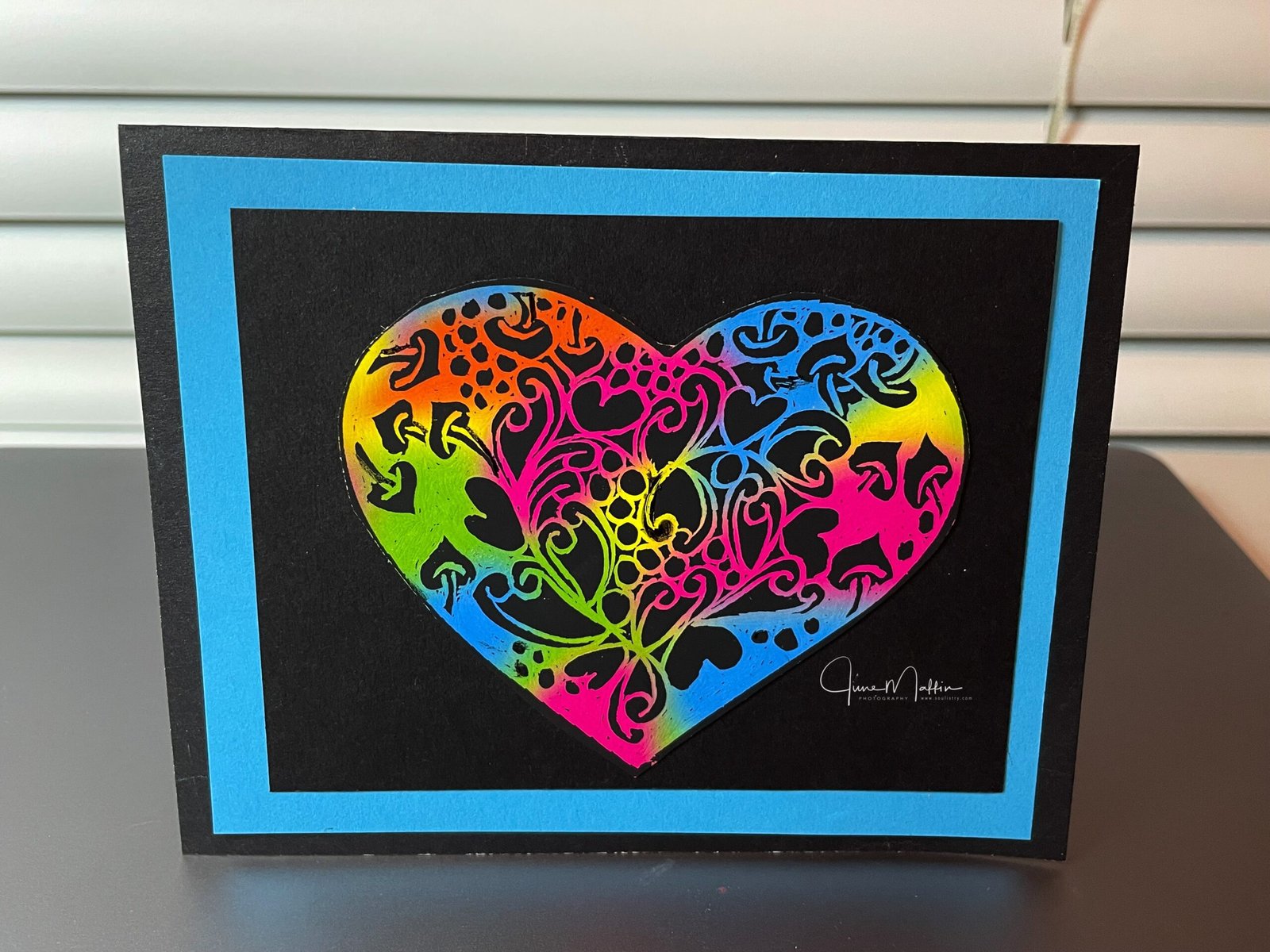
So, how about instead of focusing on Valentine’s Day … we make the whole month of February LOVEUARY month, and express love to someone (relative, stranger, friend etc.) by making a card with a heart on it. Loveuary (Love+uary from February).
I’ve been making heart-cards … Loveuary Cards … and leaving them in clear plastic sleeves in various places in our little town. There are lots of places and people who would welcome a Loveuary Card: reception desks at assisted living homes, homeless shelters, nursing homes, low income housing … a neighbour … your child’s teachers … your doctor/dentist/friend/physio/dental hygienist/minister/relative … fire department … police department, etc., along with a little note that says “This card is yours. It was made with love. I hope it puts a little smile on your face. Keep it. Pass it on to someone else. Or just leave it where you found it for someone else to find.” (and then I add “Created for you in Duncan, British Columbia an “Art Abandonment Project.”
Or, something like this: “I am NOT lost. I was placed here to bring you JOY. “
Use your own words. Add your own location – or not. Add “Art Abandonment Project” – or not.
Please just be mindful of potential security and health issues when you leave your cards.
The best places to leave the Loveuary cards seem to be at reception centres, community/church/town Bulletin Boards and handed to another personally, not on vehicles, in stores or medical facilities.
Let’s make February, LOVEUARY month! Let’s share a little love! Whip out your calligraphy / painting / craft supplies / crayons and make a Loveuary Card. It can be a simple heart … a bunch of hearts … on cardstock, on craft paper, on watercolour paper … on whatever! The recipient will be delighted by what you make because you made it with love.
This year, I’m making my Loveuary cards on scratch paper … black and when you scratch the design, colours flood through the black to the surface! Then I mount it on coloured cardstock and then mount it all on folded black cardstock. You never know what colour is underneath. It’s such fun! HAPPY LOVEUARY!
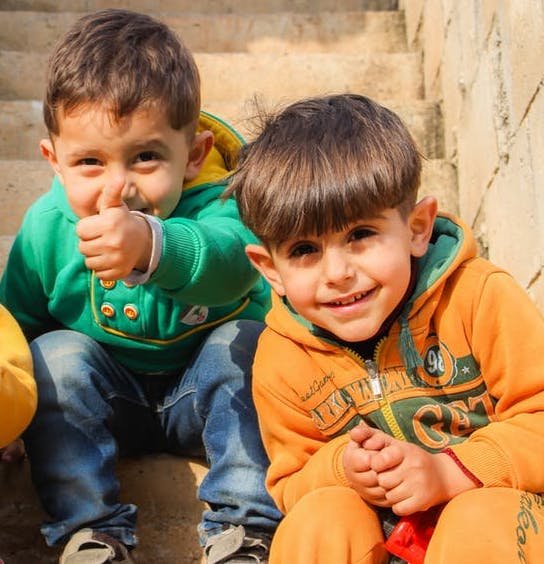
Why do we focus on that which separates? Why do we dwell on differences?
Surely, regardless of ,.. religion … ethnicity … gender … geographical location … sexual identity … financial status … language … birthing order … education … ability … sexual preference … colour of skin, eyes, hair … etc., etc., etc., etc., etc., etc., we are more similar than different?
When we bleed … our blood is red. When we feel pain … it hurts. When we smile … it’s the same language.
There is more that brings us together … than keeps us apart.
While we recognize and acknowledge our differences which make us unique, instead, may we celebrate our similarities which bring us together.
Thanks to Asger Lethfor of Denmark for the “Three Beautiful Human Minutes” video: https://www.youtube.com/watch?v=Hcwjkalm718
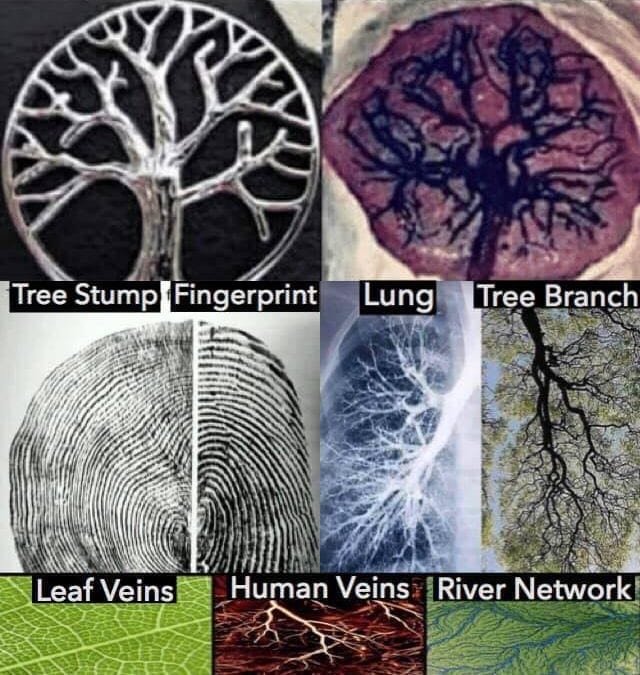
When I saw these images, I was reminded of words in the Old Testament: (we are) “fearfully and wonderfully made.” <Psalm 139 verse 14>.
In the context of Biblical times, the word ‘fearfully’ was not based on today’s understanding of ‘fear,’ but based on the-then understanding of the word which was ‘awe’.
The word ‘wonderful,’ meant ‘filled with wonder’.
‘Awe’ and ‘wonder’ summarize my response to the physical part of ourselves (our bodies) and to this planet, its inhabitants, flora fauna, animal kingdom.
When I consider the fibonacci sequence, fractals (branching in trees, arranging of leaves on a stem, fruitlets of a pineapple, flowering of artichoke, arrangement of a pine cone, etc., I am even more in awe. If that’s even possible!
Have a look at these images:
Co-incidence?
Creative imagining?
Divine creation?
The universe … the plant world … the animal kingdom … human beings … the environment) …. each – “fearfully and wonderfully made.”
“Gift”.
As the receiver of these gifts, may we be responsible as their caregivers … care for the plant world, care for the rivers and lakes and oceans and the worlds contained within them, care for the atmosphere, care for the animals, care for the environment, care for one another – and care for ourselves.
Life, in all of its manifestations, is precious and has been “fearfully and wonderfully made.”
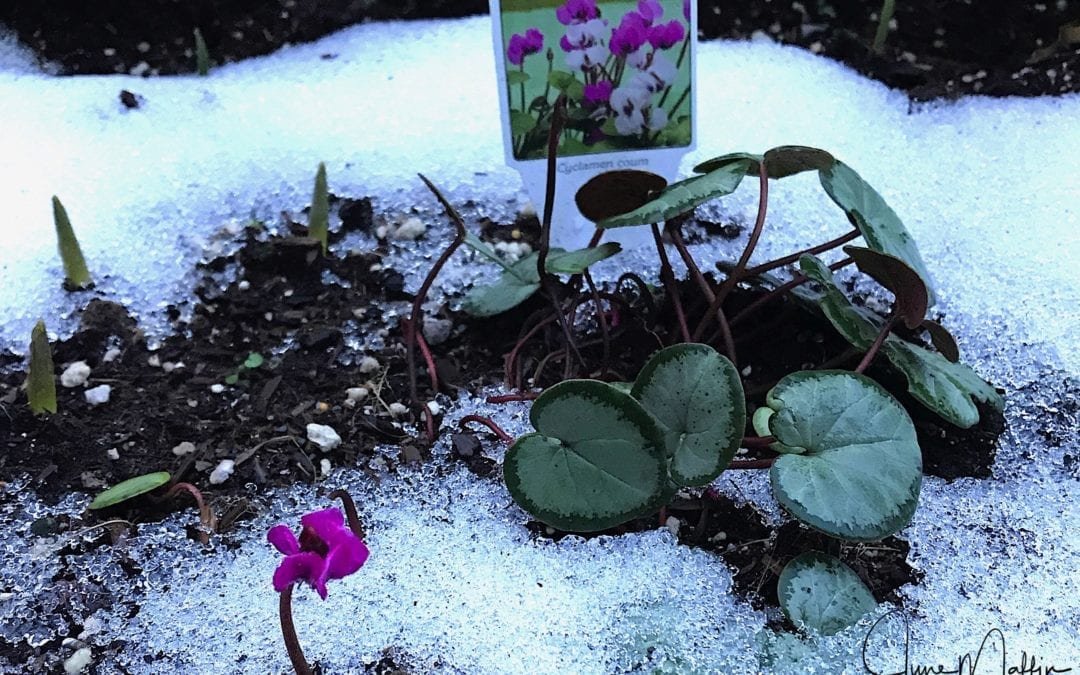
Last week, there were no daffodils beginning to grow and no cyclamen flower blooming. I knew they were there … but they had been covered with snow. A lot of snow!
The snow was on the streets, in driveways, in gardens, in parking lots. Over a foot of the white stuff covered the flower beds and I anticipated that the snow had severely injured the plants growing underneath.
But then because of the constant rain, much of the snow has melted and underneath … a little miracle if you will! The plants under the snow had all faced the adversity of a winter storm and yet had survived … the winter cyclamen had blossomed and the daffodils to the left of the cyclamen have begun their journey through the dirt to become a flower.
It is said that “Tenacity is strength in adversity.” When we “hold on” in adversity, whatever the situation, be that Nature’s fury, personal health issues, politics or whatever, we are being tenacious. And tenacity is strength! I like that thought.
Consider these people: Greta Thunberg … Joan of Arc … Rosa Parks … Martin Luther King Jr. … to name just a few.
Consider the people you know: family and friends who have weathered personal storms, Nature’s storms, stormy consequences of political decisions …
Each of us, at one time or another, has “weathered a storm” and demonstrated ‘tenacity in adversity.’ If you doubt that, take a moment and think of a time when you were faced with a situation that was contentious, frightening, anxiety-producing … aka “adversity.”
Then take a moment to reflect on how you got through that time/that moment/that experience – how you’re getting through it now.
Each of those moments was an example of your resilience … your tenacity. You “got through,” in some way. Strength!
My late husband, shortly before dying, whispered “You are stronger than you think you are.” At that moment, and in the moments, days and weeks and months which followed, I didn’t “feel” strong. But he was right. I “got through”: tenacity. Tenacity is strength.
May we each remember and not lose sight of that when adversity enters our lives again. We are stronger than we think we are.
It never ceases to amaze me how similar, rather than how different, people are. And each year at this time, I’m reminded of that truism because different cultures and religions welcome a similar image – a candle – as a meaningful symbol in their rituals, celebrations, worship, traditions.
In that symbolic image … we share a powerful similarity … those who follow the ancient Celtic tradition of Winter Solstice place a candle in their window as a symbol of light overcoming darkness … the eight day Jewish celebration of Hanukkah is marked by the lighting of an eight-candled Menorah on each day of Hanukkah, often referred to as the Festival of the Lights … the four week Season of Advent before Christmas Day is marked by the lighting of a different candle each Sunday anticipating the hope, peace, love and joy of the Season of Christmas as candles/lights on Christmas trees and wreaths continue the theme of light and focus on the man, Jesus, believed by Christians to be the Light of the World.
Today, December 26th, African culture and history is celebrated in the United States by the seven day festival of Kwanzaa. That’s today! During Kwanzaa (a Swahili word for ‘first’ meaning ‘first fruits’), a special candle holder (a Kinara) holds seven candles: three red ones on the left, three green ones on the right with a black candle in the centre.
The seven Kinara candles represent the Seven Principles of Kwanzaa (Unity, Self-Determination, Collective work and responsibility, Cooperative economics, Purpose, Creativity, and Faith). Each night during Kwanzaa a candle is lit … the centre (black) candle is lit first and on each of the subsequent nights of Kwanzaa, the black candle alternates between the red and green candles (stating with the ones on the outside and moving inwards) – which is similar to the lighting of the Shamash candle in the centre of the Menorah which then lights the other lights in the stand for Jewish people in their celebration of Hanukkah.
And before the month of December, there is Diwali, the Hindu festival of lights, symbolizing the spiritual ‘victory of light over darkness, good over evil, and knowledge over ignorance’ where, in northern India, they celebrate the defeat of their enemy by lighting rows of clay lamps. There are likely others but suffice to say, light is an important symbol for many people, cultures, religions.
To those who put a light in their window each night throughout the ancient tradition of Winter Solstice … to those who light the Menorah on each of the eight days of Hanukkah … to those who light the candles on each of the four weeks of the Season Advent … to those who place lights in wreaths and trees throughout the twelve days of the Season of Christmas, in Solstice, Hanukkah and tonight, a Happy Kwanzaa as they begin their seven nights of lighting the Kinara, thank you for keeping the light going.
May the light shine from within each of us – through each of us – and beyond each of us – so that when we watch the news and become disenchanted, distressed, concerned or fearful by the growing spread of the pandemic, we focus more on what ‘unites’ us than what ‘divides us’ … as President John F. Kennedy reminded us “remember that what unites us is greater than what separates us.”
As always, you are welcome to share with others and comment here. And you are invited to subscribe to the Soulistry-Artistry of the Soul blog by going to the right hand top of this reflection:Subscribe to Blog via Email. Notifications of new reflections will come directly to you via email. *********************************************************************** To read other posts about Winter Solstice, Hanukkah, Advent, the Twelve Days of Christmas, click https://soulistry.com/blog and in the Subject line, type the word you are looking for. If a Reflection has already been posted, it will immediately come on your screen. If it has not and you would like to suggest one, send a note to junemaffin at gmail dot com
There they were … perched on a rock, surrounded by twigs and grasses. Seashells. A variety of seashells.
What were they doing there? There was no ocean nearby. No sandy shore. And yet, there they were. Seashells and a little wooden star nestled on a path in the woods.
I almost didn’t see them. It was raining, And I was walking quickly to avoid the puddles and mud.
And then a question deep within surfaced. “What other treasures do I miss because I’m in a hurry … because my thoughts are focused elsewhere?”
And I wondered “what treasured-moments do we all miss because our thoughts are elsewhere … our eyes are elsewhere?”
Whoever placed those little treasures in that place on that rainy morning … thank you.
I’ve been playing with alcohol ink again lately. Alcohol inks are vibrant, fast-drying and a highly fluid colour. They work on just about any clean, oil-free surface, are moisture-resistance and once they dry, they’re permanent. I had some small pieces of tile and thought it would be fun to play and experiment with the alcohol ink on the tiles.
It was an intriguing experience. I didn’t “design” anything ahead of time. I simply plopped little drops of coloured alcohol ink on the white tile and watched it move.
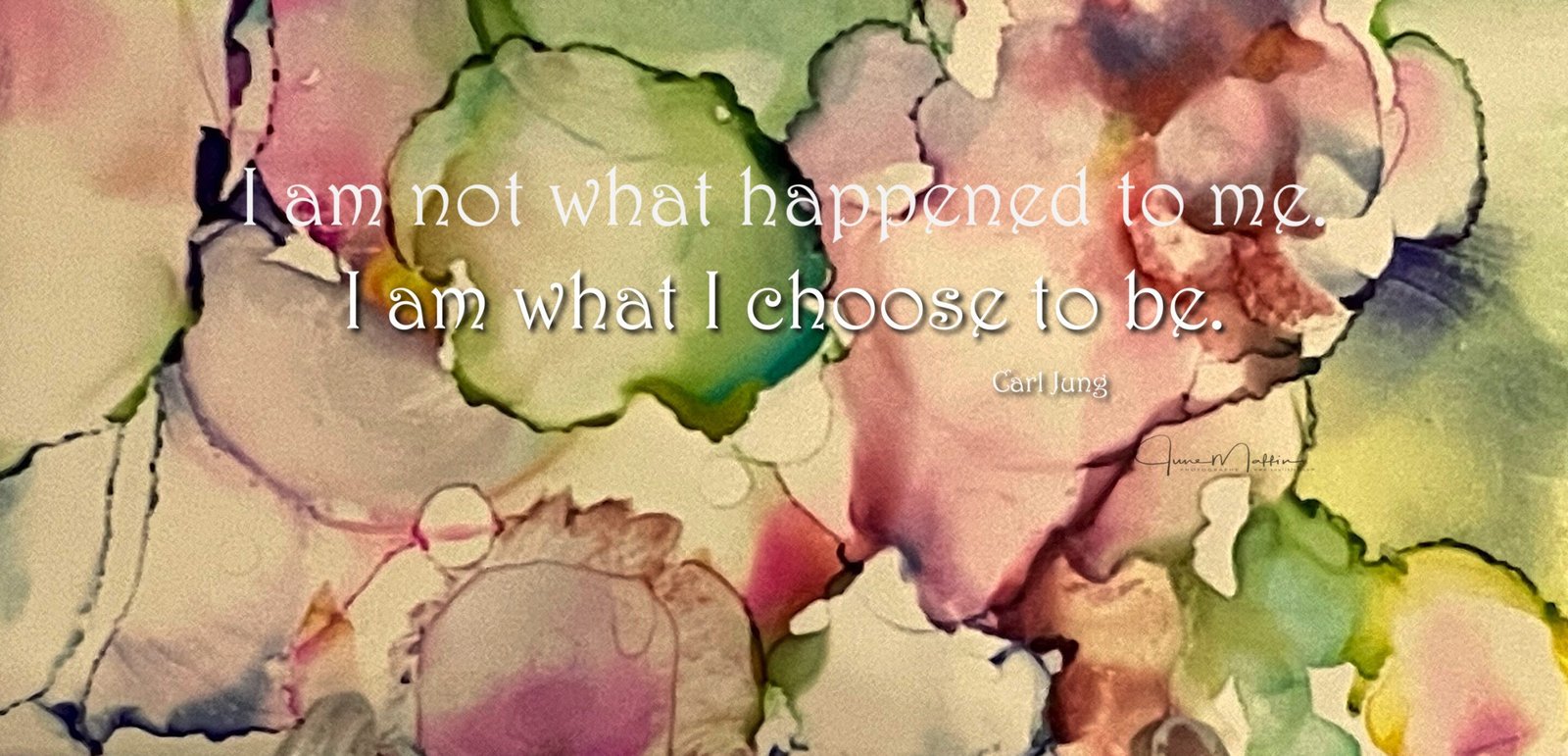
The alcohol ink went where it chose to go and as I watched the movement of the alcohol ink on the tile, creating shapes, blending colours, I was reminded of Carl Jung’s words “I am not what happens to me. I am what I choose to become.” The outcome of the alcohol ink on the tile was a direct result of what it ‘chose to be.’
I wonder – what about us? Do we self-predict our lives negatively by focusing on what happened in the past? Do we nurture and encourage our lives by focusing on becoming what we choose to be?
“I am not what happened to me. I am what I choose to be.” <Carl Jung>
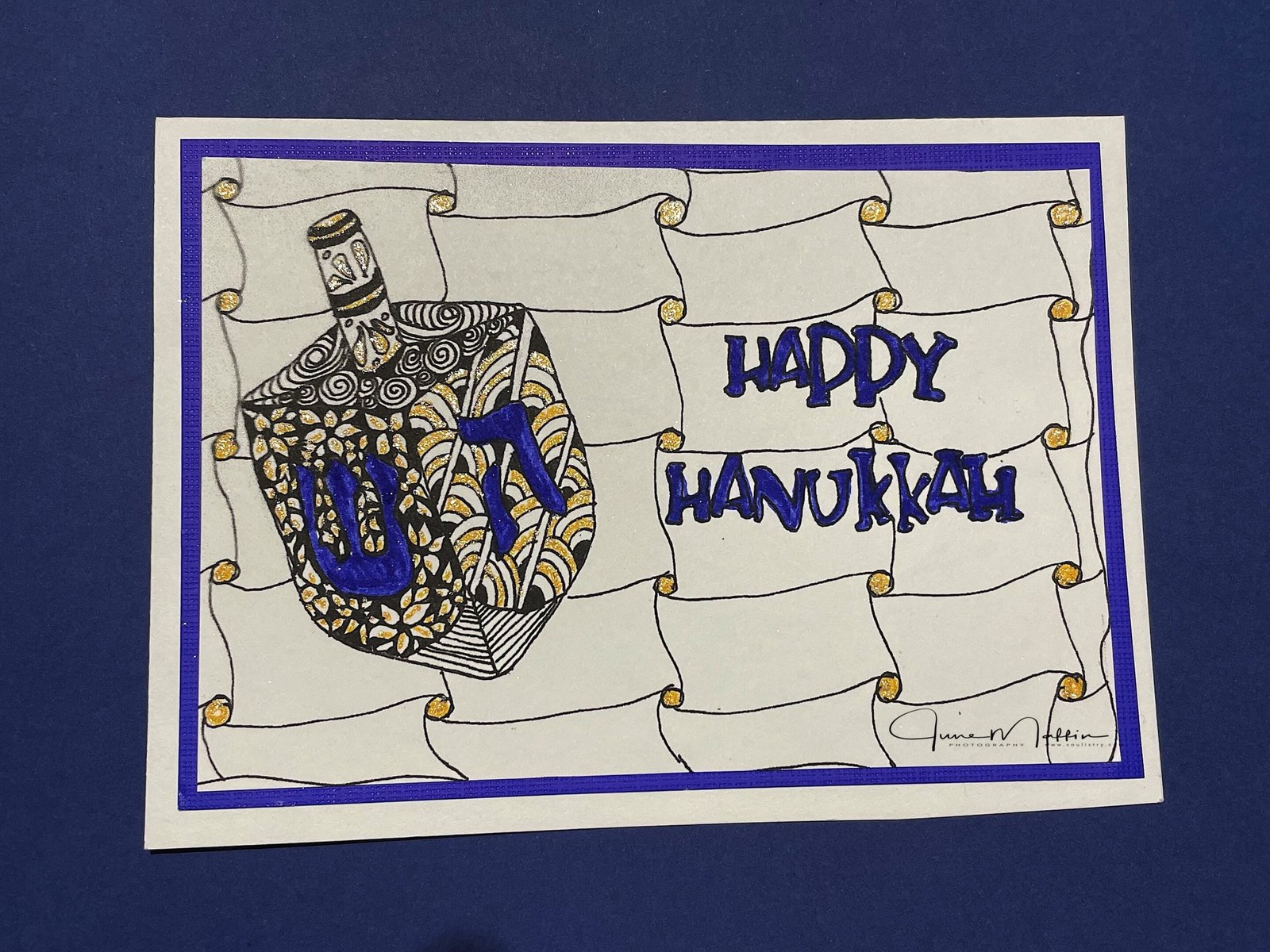
Hanukkah is a Jewish festival that reaffirms the ideals of Judaism and commemorates the rededication of the Second Temple of Jerusalem by the lighting of candles on each day of the Hanukkah festival.
May it be blessed, happy and safe for all observing Hanukkah in these turbulent times. Chag Sameach!
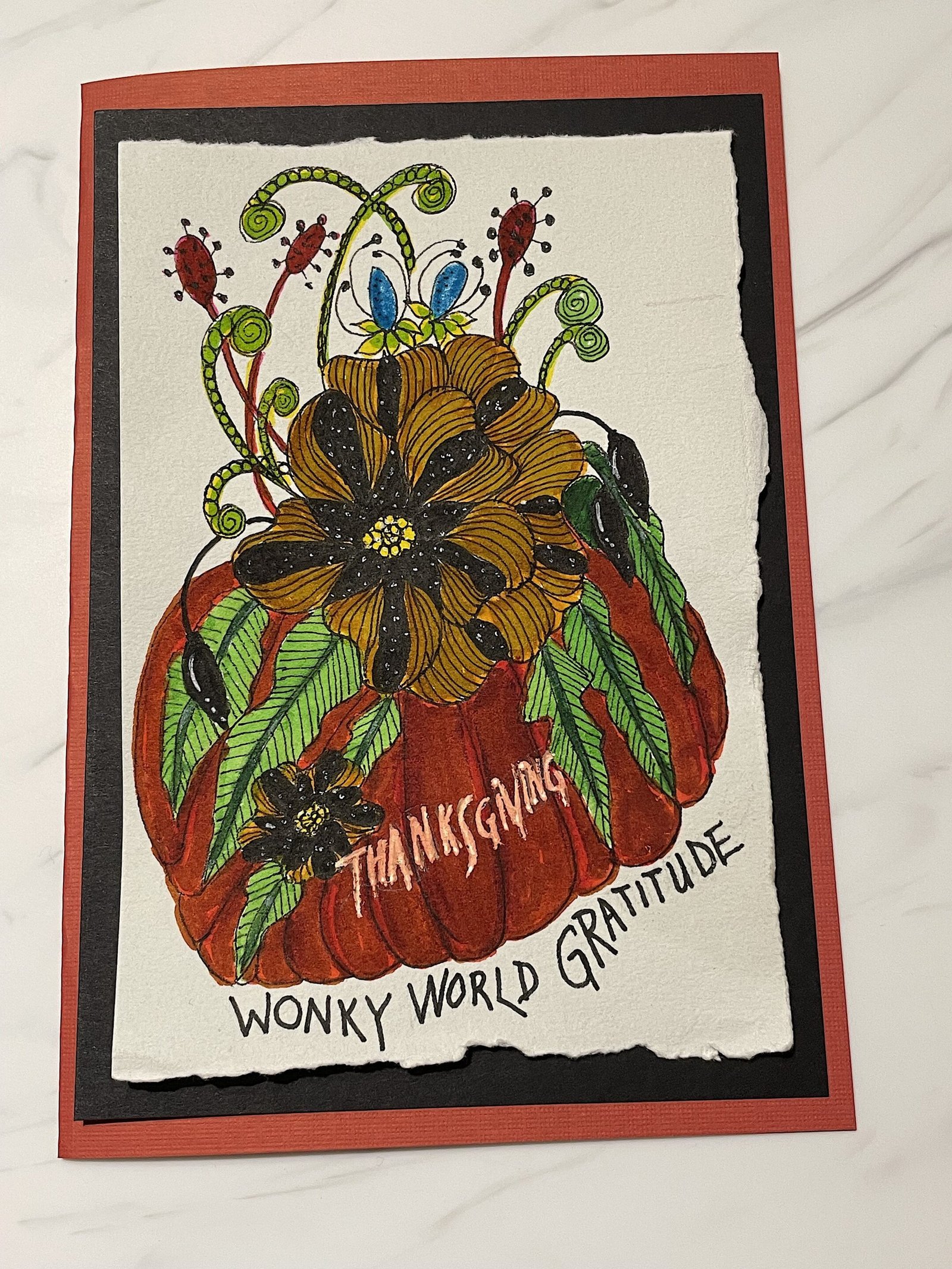
For some reason, those words wouldn’t leave my thoughts last night as I worked on a lovely pumpkin design by Suzanne Crisafi. But for me, it wasn’t working out to be ‘lovely.’ The Ecoline markers I had weren’t the ‘right’ colour. My hands were more shaky than usual. And vision was a wee cloudy.
I wondered how, on the eve (of the south-of-the-border-from- Canada) American Thanksgiving weekend, the ‘wonky world’ words could be appropriate. How to be in a posture of “thanks-giving” at a time when the world is so out or sorts and at times, frightening? Wonky world, indeed!
But I carried on and before I knew it, the card was complete with a very wonky pumpkin and flowers, the unplanned lettering appeared (ever-so-wonky), and a smile began to curl on my face. In spite of the wonkiness of the world, of this country, of this community, there is always reason for gratitude … big, small, huge, insignificant.
May each day be one of gratitude … ‘thanks-giving’ … even a ‘Wonky World Gratitude.’
Have you ever created something only to have it *not* end up being what you imagined it would be … a painting, a dinner, a handmade card, a Zentangle® tile, a quilt, a sweater … likely, yes.
And, when you discovered that it wasn’t what you had hoped for, did the word “fail” cross your mind? or the word “end” (as in, I’ve never going to paint, crochet, etc.) again? or the word “no,” as in your inner voice telling you ‘not’ to enter it into your local fair or contest, give it as a gift or post it on FB or IG?
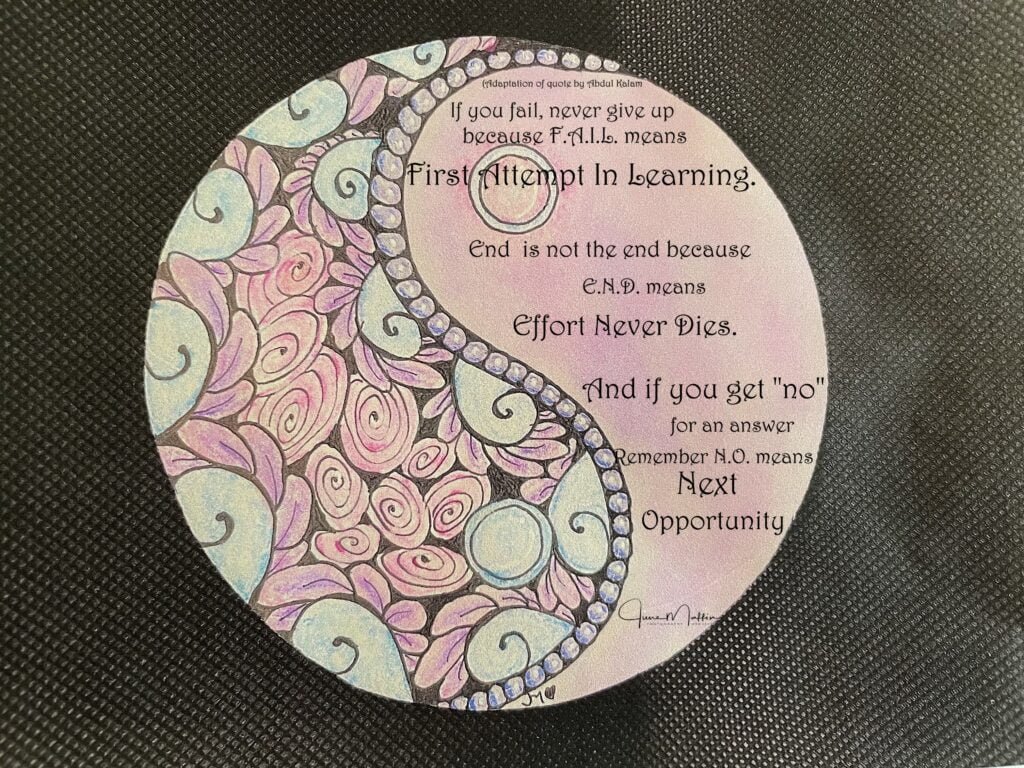
If so, then maybe it’s time to remember the words of the former President of India, Abdul Kalam (whose words I’ve adapted) … and what the words “Fail. End. No” can mean?
If you fail, never give up because F.A.I.L. means First Attempt In Learning. End is not the end because E.N. D. means Effort Never Dies. And if you get “no” for an answer, remember that N.O. means Next Opportunity.
Guess who is on to N.O. — the Next Opportunity to create.
People of many cultures, traditions and religions around the world around this time of the year, use the symbol of light to bring the spiritual victory of light over darkness, good over evil, and knowledge over ignorance with the intention of driving away the physical darkness of winter and the spiritual darkness of hopelessness and fear.
To those marking the Hindu “Festival of Lights” – a special happy Diwali which has begun. Diwali is five days of celebration where, on Day 1, homes are cleaned, rangolis and kolam are made and decorative art is drawn with rice flour; homes are decorated with clay pots (Day 2); on Day 3 (today), the height of the holiday, best clothes are worn, lamps are lit to bring as much light as possible into homes and fireworks are ignited bringing light and colour to the sky. Then tomorrow (Day 4),considered to be the first day of the new year, the focus will be on thanksgiving and reflection; and the final day of Diwali (Day 5) siblings are celebrated and the bond between them is honoured.
However, it’s not just those of the Hindu faith who use the symbol of light to banish the darkness. When we watch the news and become disenchanted, distressed, concerned or fearful by the expanding negativity, hatred, fear, it might be good to remember the words of President John F. Kennedy – “what unites us is greater than what separates us” and light a candle to symbolize the bringing of light into the darkness of the world.
For example, many … put a light in their window in the ancient tradition of Winter Solstice … light the Menorah candles on each of the eight days of Hanukkah … begin their seven nights of Kwanzaa by the lighting of the Kinara … light the candles on each of the four weeks of the Season of Advent … place lights around homes, in wreaths and trees throughout the Season of Christmas.
However we shed light in the darkness, may joy, hope and peace surround you at your special times of celebration. And may the light shine … from within each of us … through each of us … beyond each of us. May it be a Merry, Happy, Joy-filled Diwali, Winter Solstice, Hanukkah, Kwanzaa, Advent and Christmas.
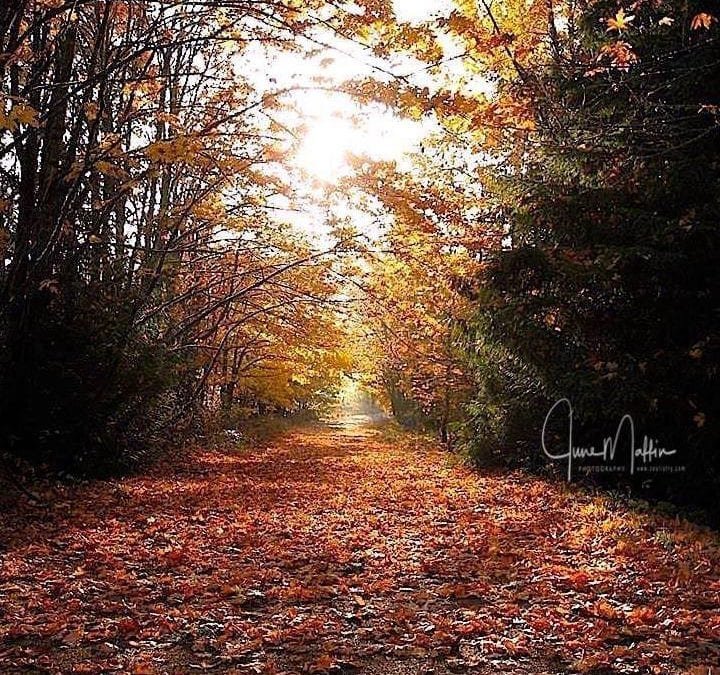
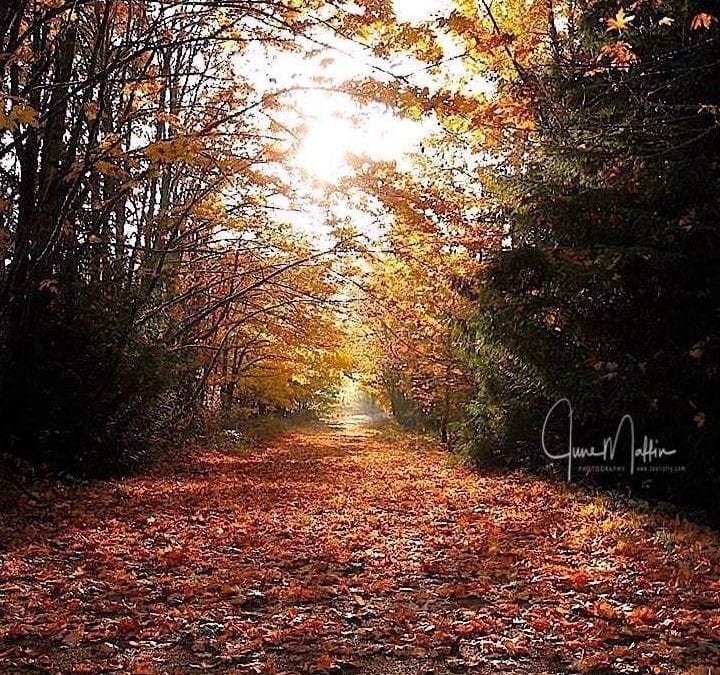
As I drove through Shawnigan Lake, B.C. on Vancouver Island, I noticed this path.
I stopped to take the photo because it caught my eye and gently reminded me that while the Fall/Autumn Season has arrived, if I look ahead, I will see the Light … the Light of Spring … the Light of Hope. It is there (at the very back of this photo – in life).
Even in the darkest of days, somewhere in the world, there is light/Light and light/Light is part of Hope. May we be the light and hold the Light for those who cannot see it, imagine it, experience it.
It’s October. Here in the western hemisphere, we are in the Season of Fall/Autumn – a beautiful time of the year where I live.
After taking this photo, I couldn’t help myself.
I took a break.
I ran down the path, playing with the fallen leaves. If only for a few moments, returning to life-as-a-child, when life was simple, uncomplicated, safe, and secure.
May we all take a break.
May we let our mind drift … far, far away from the political yuck, pandemic, global issues … from the nasty social media, personal stresses and crises … from the anger and fear and bewilderment. And for a few moments, may we let our imagination take us to a place where we scamper down a lane covered with leaves, joyfully toss the leaves up in the air, inhale the smells of this now-upon-us Season, listen to the sounds under our feet and over our head as we play, as birds fly south, as we laugh and breathe … breathe in – the Breath of Life – Ruach – fresh air – holy living.
Signs abound in Nature and within us as we move into and through the Autumn Season of our lives.
There are times when we feel alive and vibrant in body, mind and spirit. There are times when we realize that the withering of skin,
the creaking of bones, the aching of muscles, the forgetfulness that can come with the aging process are simply part of the Autumn Season of life.
Is it wisdom to ignore these signs? Is it wisdom to focus solely on these signs? How can we maintain balance and acknowledge the the cycle of life?
Perhaps trees and leaves can be our teacher. When leaves change colour … the tree is still there. When our face, legs, arms, neck, hands begin to wither … we are still there. When leaves fall … not all fall at the same time. When we rise from a chair or sofa … stiffness doesn’t always remain with us.
Fall/Autumn is here. Winter is coming. And in the meantime, if leaves and trees could talk, perhaps they would remind us to spread our branches, to acknowledge our natural beauty in each season, and to welcome life.
Conversations seem to be happening more and more often around “Get your affairs in order … just in case” as fires, flooding, tornadoes, hurricanes, etc. cause devastation and people are faced with the seriousness and reality of their own mortality.
I encourage friends to not just speak about such things – or just think about them – but actually “get their affairs in order.” But, I find few do.
There are always excuses – verbal and unspoken … “I’m young. I’ve got lots of time.” … “My partner/husband/wife just won’t talk about this.” … “My kids will make the right decisions for me/us when the time comes.”
When serious illness is diagnosed, when someone unexpectedly dies, when weather horrors result in the destruction of home / business, the consequences of ‘not being prepared’ lead to even more stress.
Several years before my beloved Dutch-born husband Hans died, we not only tightened up our paperwork (aka “got our affairs in order” – updated our Wills and Representation Agreements), but each wrote what our wishes were (what we called our PWD – Personal Wish Document), if we were not able to die at home but had to be in institutional care or were permanently hospitalized.
Things like — “If I can swallow, my favourite beverage is … ” (for me: Tim Horton’s Hot Chocolate; for Hans: Scotch <g> — “If I can hear, see, I’d like certain personal things close by … ” (watch, eyeglasses, hearing aids, iPhone, pillow, blanket etc.) — “If I can read, I’d like my … “(iPad, reader, favourite book etc.) — “If I can hear, I’d like to hear music” (for me it’s musicals and semi-classical symphonies and baroque; for Hans it was organ music and Diana Krall) — “If I can watch tv, I’d like to watch … “(for Hans it was “How It’s Made” and the history channel; for me it’s musicals and British comedy) — “If I can eat, I’d love a treat of … ” (for both of us it was milk chocolate).
Even though Hans couldn’t swallow, I put a drop of Scotch on his tongue and he could taste it. Same thing with the smallest amount of milk chocolate. And, he watched “How It’s Made.” Well, the tv was tuned to that channel. I’m not sure he was aware it was on that channel, but who knows. Scientists say that the last sense to leave us is our hearing, so maybe he was hearing it.
I would add something else … record your voice. Oh, how I wish I had thought of, and done, this one. I have lots of photos of Hans, but no record of his voice and I would love to hear his sweet voice.
Hans and I believed that death was a part of life and neither of us had a fear of death. It was the dying part that we weren’t thrilled about. But doing the above gave us a sense of control over that part of life’s journey.
Loss of control is something that happens towards the end of our lives. It can happen in small ways – and in large ways. But, having such a PWD (Personal Wish Document) along with updated Wills and Representation Agreements CAN help.
Death is not a pleasant subject. However, the reality is – death is going to happen some day to everyone we love – and to ourselves.
When we die, our loved ones will experience a variety of emotions. Underneath it all, is stress. Profound, gut-wrenching, deep stress.
But, there are things we can do before our life’s journey ends – some things we can do to make our death less stressful for those we love. “Get things in order.” Now. Not next month. Not next year. Earlier than later … “get things in order.”
There is something about ‘learning’ that not only touches the soul, but activates it — opening our heart to new experiences, new feelings, new thoughts.
I don’t know how long I looked at this plant on the walk before I took its photo, or how long I looked at its photo in my camera, but there was something quite magical about it all.
The plant took me on a journey of learning about the ‘name’ of the plant and what other indigenous plants in our provincial parks have been used by the First Nation peoples to heal bodies, flavour food, and add colour to fabric.
As I walked in our local Provincial Park, it “called” to me. I’d never seen one before. It was tall and gorgeous … a very large leaf with a tiny flower in the centre. “What are you?” I wondered. After some research, I learned that it is ‘Miner’s Lettuce’ … an indigenous plant common on Vancouver Island.
Its magnificent leaves form a rosette. Inside that rosette, there are tiny pink or white flowers with five petals in the centre, and the outer leaves turn a deep red colour when they dry out as the days get hotter and drier.
Thank you, little plant, for a new opportunity to experience spirituality in yet another way of opening my heart to the blessings around me.
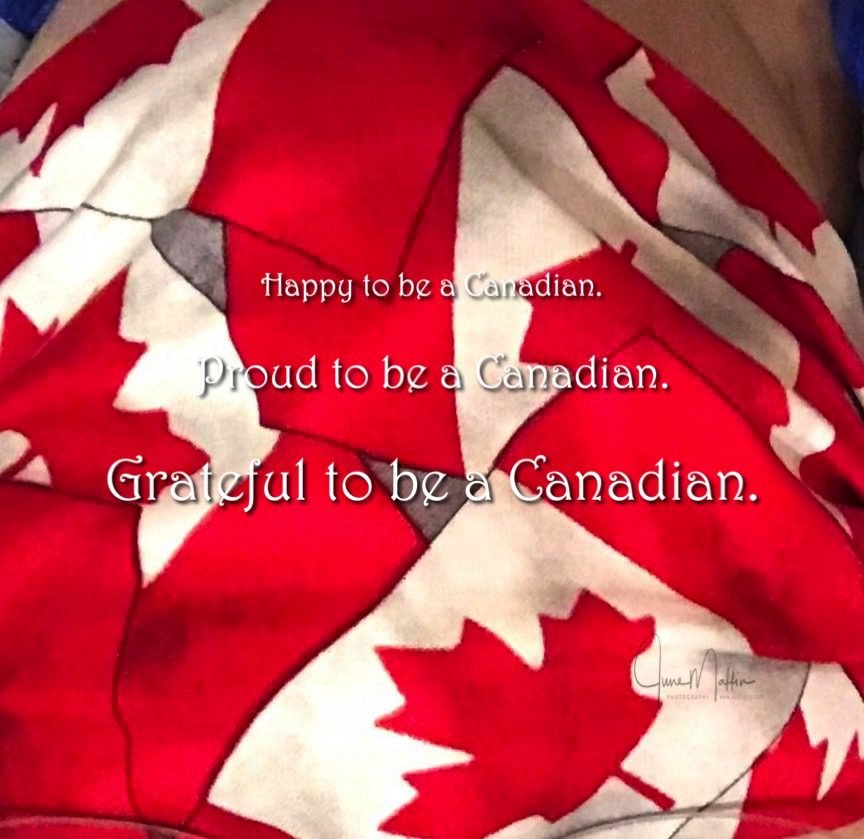
Today is Canada Day in this country. I honour and pay respect to the privilege and reality that I live on unceded aboriginal land, meaning that Aboriginal Title has neither been surrendered nor acquired by the government (Crown) and that our national anthem notes “our home and native land.”
Canada became a self-governing Dominion on July 1, 1867. That’s only 156 years ago. We are a very young country.
The First Nations people have been here for over 15,000 years. Our history with the People of the Land was not good long ago. It is not good now, as many in our land continue to reel at discoveries of unmarked graves of children on properties of former Residential Schools, and the ongoing reality of missing and murdered indigenous women continues to appall.
But there is hope in the gentle word “Mamawi” which is Cree for “All together” – a word which holds a hope that reconciliation can happen and that this country *can* heal. It will take intention. It will take time. It will take sacrifice. It will take work. But it is possible.
As we move into the next year of the history of this country of Canada, may we work to more fully respect the traditions of the First People of this land. May we honour their love of and care for the land, waters around it, the animals and life that live on our land and in the waters around. May we stop pointing fingers and recognize our role in the sense of helplessness, anger and fear by colonization and racism. May we find healing ways to acknowledge the hurt in our country’s history. And may we express gratitude for the good that is here. For there is good here.
Happy Canada Day, my friends. May it be a peaceful and safe day, mindful of our many blessings.
************** OUR NATIONAL ANTHEM: We are a bilingual country.
OUR NATIONAL ANTHEM IN ENGLISH “O Canada! Our home and native land! True patriot love in all of us command. With glowing hearts we see thee rise, The True North strong and free! From far and wide, O Canada, we stand on guard for thee. God keep our land glorious and free! O Canada, we stand on guard for thee. O Canada, we stand on guard for thee.
OUR NATIONAL ANTHEM IN FRENCH Ô Canada! Terre de nos aïeux, Ton front est ceint de fleurons glorieux! Car ton bras sait porter l’épée, Il sait porter la croix! Ton histoire est une épopée Des plus brillants exploits. Et ta valeur, de foi trempée, Protégera nos foyers et nos droits. Protégera nos foyers et nos droits.
OUR NATIONAL ANTHEM’S BILINGUAL VERSION O Canada! Our home and native land! True patriot love in all of us command, Car ton bras sait porter l’épée, Il sait porter la croix! Ton histoire est une épopée Des plus brillants exploits, God keep our land glorious and free! O Canada, we stand on guard for thee. O Canada, we stand on guard for thee.