How many of us live perfect lives? … lives that are free from stress, devoid of unpleasantness? … lives without people who are disrespectful, hateful, sarcastic, prejudiced? … lives without experiencing fear … of anything … anyone … any situation? … lives without a disability of some kind be that physical, intellectual, emotional, spiritual?
Not one of us.
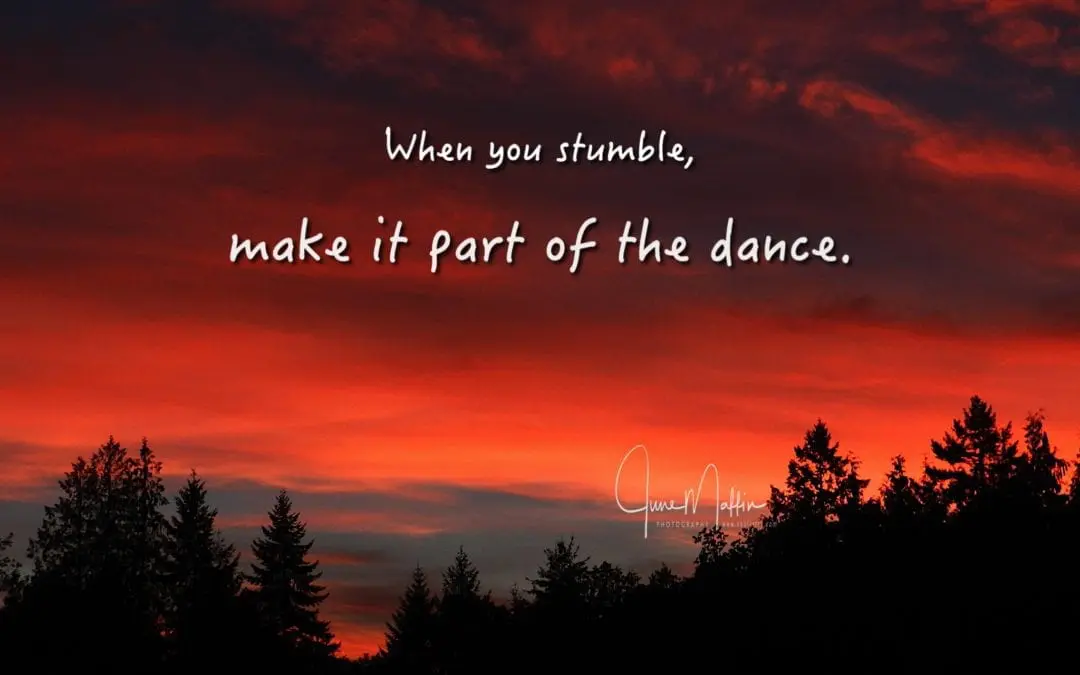
We all stumble at one time or another.
Hopefully, when we do (in spite of whatever hurdles, barriers, curveballs life, weather, people, or heredity sends our way), we will do so as part of the dance of life, remembering that science has proven that dancing is good for the body, good for the mind, good for the soul.
When we stumble, may we make it part of our dance of life.
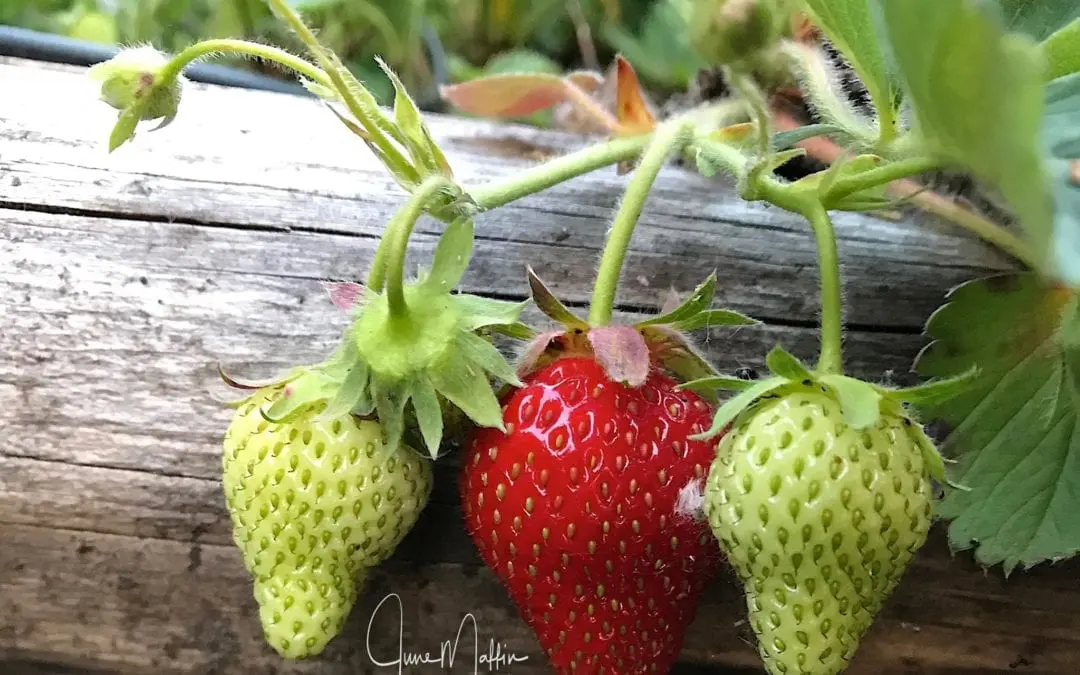
There they were: cuddled together in the strawberry patch in the back yard. One, ripe and ready to eat; two, on their way to ripehood.
Thinking about it all, I realize why I was so struck by seeing the three strawberries together like that.
They were a gentle reminder of the Creator and Mother Nature’s beauty and bounty … all happening in my back yard!
Miracle.
Some days, the yuck and pain of our lives and the world can seem to be so overwhelming that we forget to look – down … up … sideways … beside us … behind us … in front of us – expect to see a sign of the Creator – expect to see and experience a miracle.
When we forget to do that looking, we can miss seeing and experiencing three strawberries as much more than three little pieces of fruit.
Just three strawberries. Three, simple, easily-missed-seeing, expressions of beauty and bounty and blessing.
Ahhh, I can hear my brain beginning to make links to ‘other *three’s* … links to the Trinity … links to …
But I’m going to restrain myself and instead, go outside and look around, up, down, beside me, in front of me, behind me and expect to see a sign of the Creator … expect to see and experience a miracle.
I know I won’t be disappointed.
While the definition of ‘miracle’ is subjective (and perhaps the catalyst for another Soulistry blog posting), this night I’m simply going to enjoy these three beauties from Nature’s bounty and be grateful for the beauty and bounty and blessing – and miracle – that is in my garden.
“Words, words, I’m so sick of words” sang Julie Andrews in ‘My Fair Lady’.
There are times when I’m sick of words too … words that people use to explain their lies … words used to defend indefensible positions … words that belittle – abuse – mock – harass – demean – bully – disrespect.
Author, theologian and priest, Matthew Fox, noted that “silence gives way for Spirit to arrive.” I like that – a lot.
International calligrapher, Alice Young, beautifully rendered Fox’s words and I was led to ponder a possibility – a challenge – a hope – a prayer: that each of us would turn off our tv, computer, radio, iphone, ipad, etc. for one hour each day, for the next three days and, in that one hour, we would not be involved in any conversation by … text … email … social media … phone … or in person.
What would we do?
We would “do” nothing. We would simply “be” … be present to the still, small Voice within … be present to the sounds of Nature’s joy … be present to the silence
In so doing, we would give space for Spirit to arrive and maybe, just maybe, … truth would emerge … reason would surface … healing might begin.
So much stress! Too many distractions! Much too much to do each day! Traffic! No parking spaces! Noise, noise, noise. Busy, busy, busy. Does any of this sound familiar??
For many people these days, it does. Their lives seem filled with things to do, people to visit, work to complete, shopping to finish, meals to make, chores to accomplish, errands to run. People speak quickly. Eat their meals quickly. Walk quickly. Breathe quickly.
How often each day are the flowers that are poking their heads into view, noticed? the laughter of the children at play, delighted in? the spider weaving its intricate web, admired?
Or does rushing through each moment of each day, until bedtime arrives, and you find yourself exhausted, better describe your day?
“I want some peace” some whisper (or shout!). And yet they seldom pause long enough to experience that peace … seldom relax so that their shoulders aren’t scrunched up in tension … seldom listen to the breath they breathe … seldom experience the peace that comes when they open themselves to be “still” and receive the Holy One’s precious peace … seldom receive that inner strength that helps them cope with the busyness of life and be humbled by the gift of life given by the great Giver of All Life.
If you are willing to receive a glimpse of that “peace that passes all understanding”, a suggestion … take a moment – right now – to close your eyes. And here’s how:
Take a deep, deep breath. Slowly breathe in and out, in and out, inviting the Giver of Peace into your life. As you breathe in, you might say smoething like “Giver of Peace, I receive your peace.” As you exhale, you might say something like “I release all that causes my body, mind, spirit to be uneasy, distressed, anxious etc.
As you do this, receive that gift of peace within your body, mind and spirit – easing the tensions, relieving the pain, quietening the dis-ease within your soul.
When you find yourself more at peace, give thanks, for you have been in the presence of the Holy.
And, when the daily stressors of life next affect your ability to function, to laugh, to enjoy life, to ‘be with’ others, to notice the miracles of life around you … remember to take a deep breath, invite the Giver of All Peace into your body, mind and spirit and receive that precious “peace that passes all understanding” – as gift.
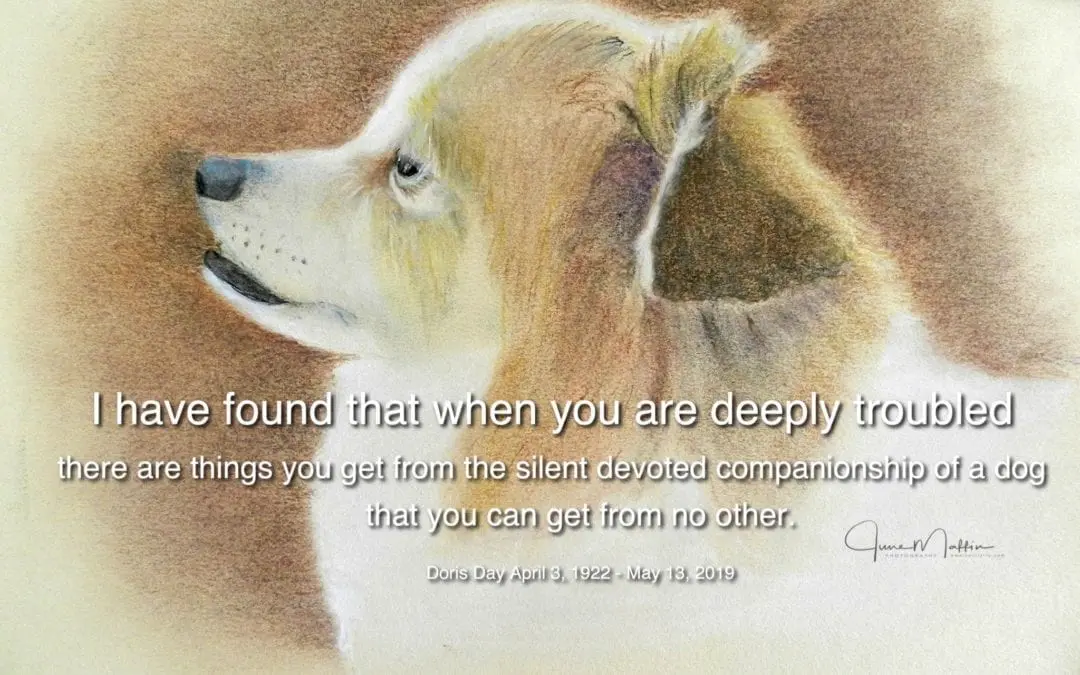
Born Doris Mary Ann Von Kappelhoff, she became Hollywood legend Doris Day. Her movies (like Pillow Talk), her singing “Que Sera, Sera” and her love of, and involvement with, animal rights endeared her to millions who this day, mourn her passing.
In spite of a life which was very difficult, you brightened this world with your singing, dancing & sweet smile. Thank you. Rest in peace, Doris. Rest in peace.
Today is the last day of Passover. Today is the first day of Easter for Christians in the East, and day six of the Season of Easter in the West. Pesach (Passover) for Jewish adherents is about liberation from slavery in ancient Egypt. Easter for Christians is about new life.
Today, there is cause for neither liberation nor new life. Instead, a crime was committed at Congregation Chabad Synagogue in the town of Poway, California. Deemed to be a ‘hate’ crime, one person died and three were injured. And the question continues to be asked … when will laws happen which will make possession of assault weapons by civilians illegal?
Grief overwhelms the people of Congregation Chabad Synagogue, the people of Poway and the families affected by this senseless violence. Thoughts and prayers? Yes, I am thinking of them and all for whom this situation raises a bitter and painful personal memory of their own.
Yes, I will offer prayers … prayers of consolation and support for the victims and their families as they grieve … and prayers for the politicians who can change laws so that no other hate crimes, terrorist crimes, mass shootings, individual drive-by shootings using assault weapons will happen.
Politicians – you can change the laws so such murders don’t ever happen again. Why aren’t you? What can’t you understand, politicians?